How To Get To Prince Edward Island: Bridge, Ferry Or Flight
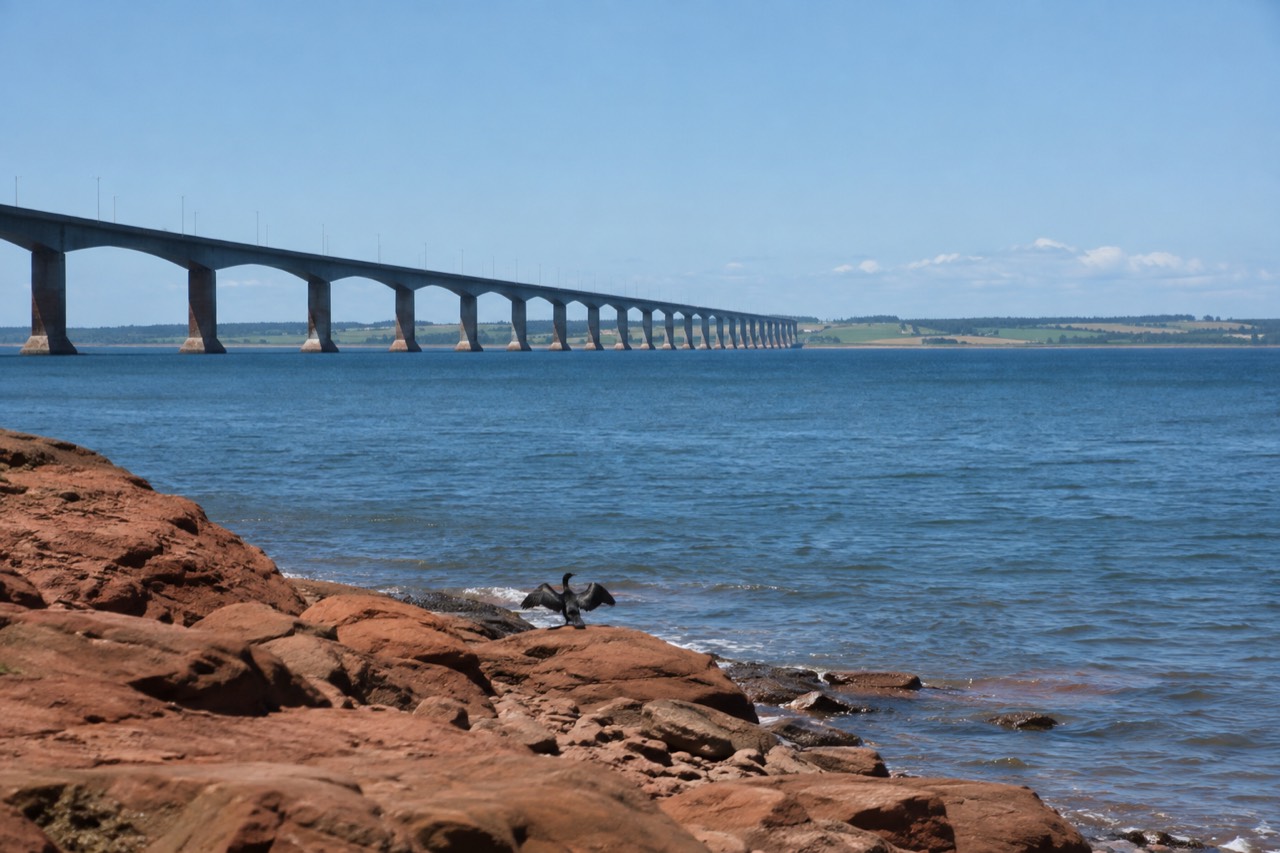
Prince Edward Island is reachable by car over a 12.9 kilometre bridge, by a 75 minute ferry from Nova Scotia, by air into Charlottetown, or by cruise ship. The prices changed recently and most pages still quote the old ones.
Short answer
Driving over the Confederation Bridge costs $20.00 per passenger vehicle, paid only when leaving the Island. The Wood Islands ferry from Nova Scotia is $43 for a car and its passengers. Flying into Charlottetown Airport served 391,086 passengers in 2025. Cruise ships add 79 calls in the 2026 season.
Reaching Prince Edward Island has never been cheaper or simpler, and yet most travel pages still publish the old prices. The bridge toll was cut from $50.25 to $20.00 on 1 August 2025. The ferry fare was halved to $43 for a car and everyone in it. Charlottetown's airport is mid-way through a $44 million expansion. This guide lays out every arrival route with the verified current numbers, then connects each arrival point to the tours that fit it, because a reader still working out the bridge, the ferry or a flight has not booked anything on the Island yet.
Can You Fly Into Prince Edward Island?
Yes. Charlottetown Airport (YYG) is the Island's only commercial airport, and it handled 391,086 passengers in 2025. It sits about 8 kilometres from downtown Charlottetown, and because the whole province is 224 kilometres end to end, no destination on the Island is more than roughly two hours from the terminal by road. Direct flights connect to Toronto, Montreal and Halifax, with seasonal routes added each summer.
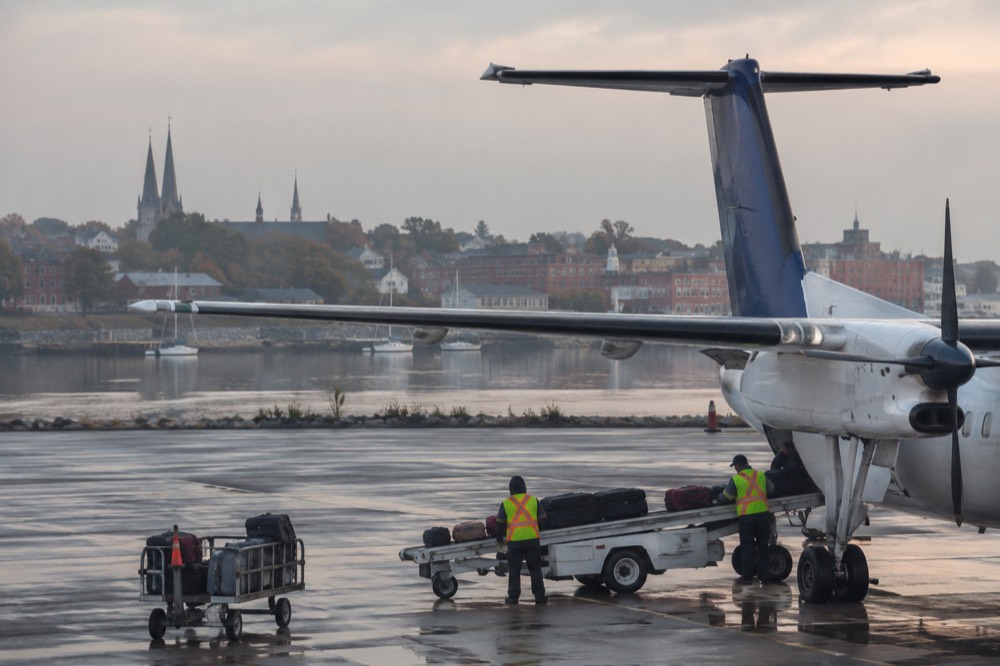
The airport is small, which works in your favour. Security lines move quickly, the drive into town takes minutes, and rental car counters sit inside the terminal. The Charlottetown Airport Authority recorded 391,086 passengers in 2025, a 4.8 percent decrease from the 2024 record, so capacity is real but not overwhelming.
Two route announcements matter for 2026 visitors. Porter Airlines ran daily non-stop service between Charlottetown and Montreal Metropolitan Airport from 18 June to 7 September 2026, a summer-only route aimed squarely at leisure travellers. Air Transat has announced weekly non-stop service to Punta Cana starting mid-December 2026 and a return of weekly Cancun service from February 2027, which says something about how the airport is stretching past its summer peak. The airport authority's own expansion page describes a $44 million terminal project with a target completion of June 2027, adding a new security screening area and departure lounge.
The practical advice is simple. Book flights early for July and August, when the whole region compresses its summer travel into eight weeks, and consider September, when the weather holds and the crowds thin. If your dates are flexible, the shoulder windows on either side of peak season offer the same Island at lower fares.
One more thing flyers should know: because every Island location is within about two hours of Charlottetown, an airport arrival does not trap you in the city. Tours with hotel pickup radiate out from Charlottetown daily in season, so a flight plus a pickup-included tour covers the Green Gables shore, the north shore beaches and the fishing villages without you touching a steering wheel.
How Much Does The Confederation Bridge Cost?
The Confederation Bridge toll is $20.00 for a passenger vehicle, and you pay it only when leaving Prince Edward Island, at the toll plaza in Borden-Carleton. Arriving costs nothing. The rate took effect 1 August 2025, replacing the old $50.25 toll, and it is charged on a round-trip basis regardless of how you entered the province. The bridge runs 24 hours a day, every day.

The bridge is 12.9 kilometres long, Canada's longest bridge and the longest in the world over ice-covered water. Driving it takes about 12 minutes at highway speed, and it connects Borden-Carleton on the Island side to Cape Jourimain, New Brunswick. The operator's posted fee schedule lists the details worth knowing before you cross.
| Fee | Amount | Notes |
|---|---|---|
| Passenger vehicle (first 2 axles) | $20.00 | Charged when leaving PEI |
| Motorcycle | $20.00 | Same rate |
| Additional axle | $0.00 | Axle-count surcharges eliminated |
| Pedestrian shuttle | $4.75 | Round trip |
| Cyclist shuttle | $9.50 | Round trip |
| Additional bag on shuttle | $4.25 | First bag free |
Two details surprise people. First, the toll is a departure cost, not an arrival cost: you cross onto the Island free and pay at the plaza on the way out. Second, the $20.00 rate is new enough that a remarkable amount of published travel advice still says $50.25, a number that has been wrong since the summer of 2025. If you see it anywhere, that page has not been checked since.
Cyclists and pedestrians cannot cross the bridge under their own power; a shuttle service carries them, at $9.50 and $4.75 round trip respectively. For a cycling itinerary, our guide to biking on Prince Edward Island covers how the shuttle connects to the Confederation Trail network.
For a driving arrival, the bridge is the fastest and most weatherproof option from central Canada, New England or the Maritimes west of the Nova Scotia border. From Halifax, most drivers take the bridge, since the ferry crossing point sits well east of the direct route.
What Does The Wood Islands Ferry Cost?
The Northumberland Ferries crossing between Wood Islands, PEI and Caribou, Nova Scotia costs $43 for a standard vehicle with all passengers included, for the 75 minute sailing. CBC reports the 2026 season starting 1 May; the operator lists sailings to 20 December, eight daily each way in peak summer. Standby travel from Nova Scotia to PEI costs nothing, though boarding is subject to space.
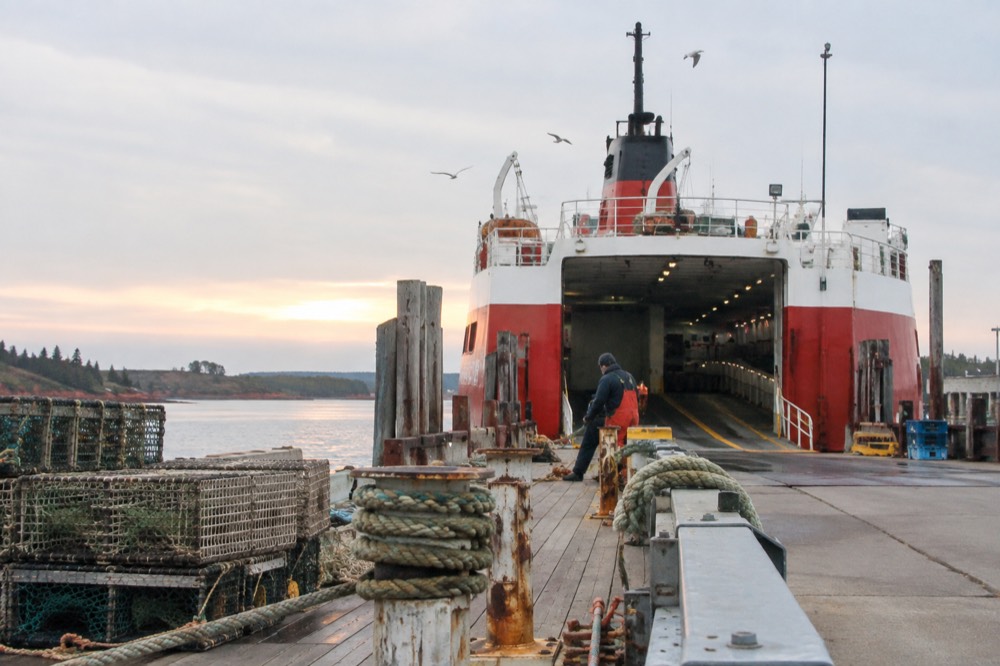
The ferry is the arrival with a view. The 75 minute crossing over the Northumberland Strait puts you on the Island's eastern end, about 40 minutes from Charlottetown via the Points East Coastal Drive, close to the lighthouse coast and the fishing ports. The operator's 2026 fare page publishes the full table.
| Fare category | Amount | Notes |
|---|---|---|
| Standard vehicle (up to 20 ft, 7 ft high) | $43 | Passengers included |
| Adult foot passenger (14 to 59) | $11.50 | |
| Senior foot passenger (60+) | $10.00 | |
| Youth (6 to 13) | $8.00 | Child 0 to 5 free |
| Motorcycle | $22.50 | |
| Bicycle | $11.00 | Rider included |
The fare structure has a quirk worth exploiting. Round-trip and one-way fares cost the same, and both are sold from the Caribou, Nova Scotia to Wood Islands, PEI starting leg. Standby travel from Nova Scotia to Prince Edward Island is free of charge, boarding subject to availability, so a flexible traveller can arrive for nothing and pay only if they return the same way. Reservations are not mandatory but are strongly recommended in July and August, and a standby crossing is never guaranteed.
The schedule matters more than the fare. From 15 June to 17 October 2026, eight sailings ran daily in each direction, departing at 07:00, 08:30, 10:00, 11:45, 13:30, 15:15, 17:00 and 18:30. From 18 October the schedule drops to four sailings each way until the season ends on 20 December. If your trip falls late in the year, check the sailing times before you build an itinerary around them.
Weather cancels ferry sailings occasionally, more often in the shoulder months than in July and August. The bridge, by contrast, closes only in severe conditions. Travellers with tight connections usually prefer the bridge; travellers with a free afternoon and a car full of kids usually prefer the boat.
A ferry arrival also pairs naturally with the eastern Island. Wood Islands sits among the lighthouse communities of Points East, and our Prince Edward Island lighthouse tours guide maps the eight lighthouse museums that open to visitors each summer, several of them within a short drive of the dock.
Which Route To PEI Is Cheapest Overall?
For a car from Nova Scotia, the ferry's $43 vehicle fare beats the bridge's $20.00 toll only if you value the crossing itself; from New Brunswick or points west, the bridge wins on both cost and time. Foot passengers pay $11.50 on the ferry versus $4.75 for the bridge shuttle. The honest comparison depends on where you start, when you travel and whether the sailing is a pleasure or a delay.
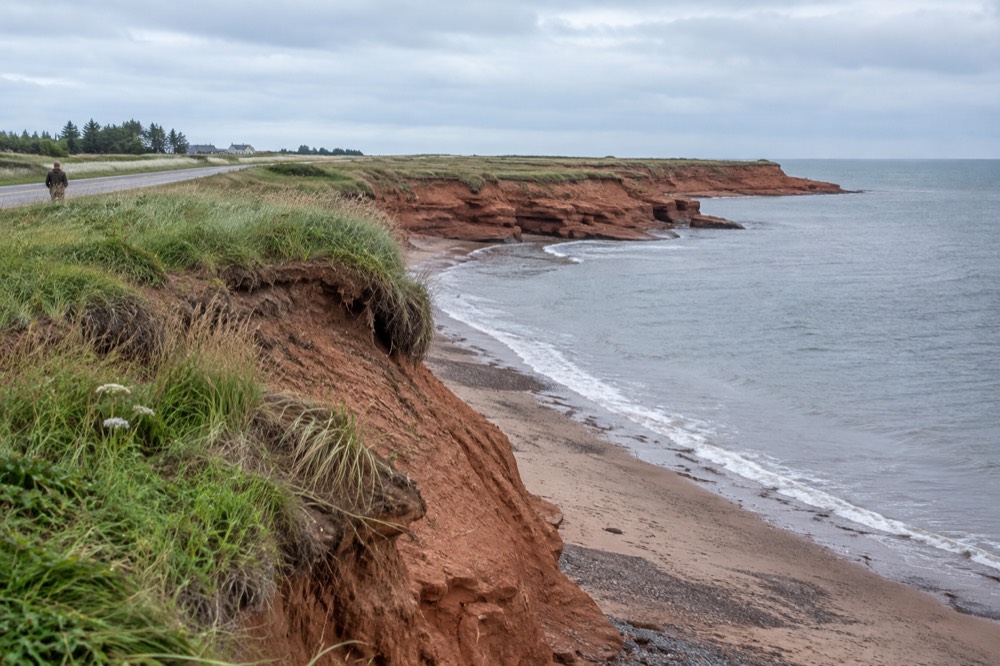
The numbers are close enough that the decision usually comes down to geography and temperament. Here is the full comparison in one place.
| Factor | Confederation Bridge | Wood Islands Ferry | Flight to YYG |
|---|---|---|---|
| Cost, car | $20.00 leaving PEI | $43, passengers included | No car needed |
| Cost, solo traveller | $4.75 shuttle | $11.50 foot passenger | Airfare varies |
| Crossing time | ~12 minutes | 75 minutes | ~1 to 2 hours in air |
| Season | Year-round, 24/7 | 1 May to 20 December | Year-round |
| Weather risk | Very low | Moderate in shoulder months | Low |
| Arrives at | Borden-Carleton, central south shore | Wood Islands, east end | Charlottetown |
| Vehicle needed after | Yes | Yes | No |
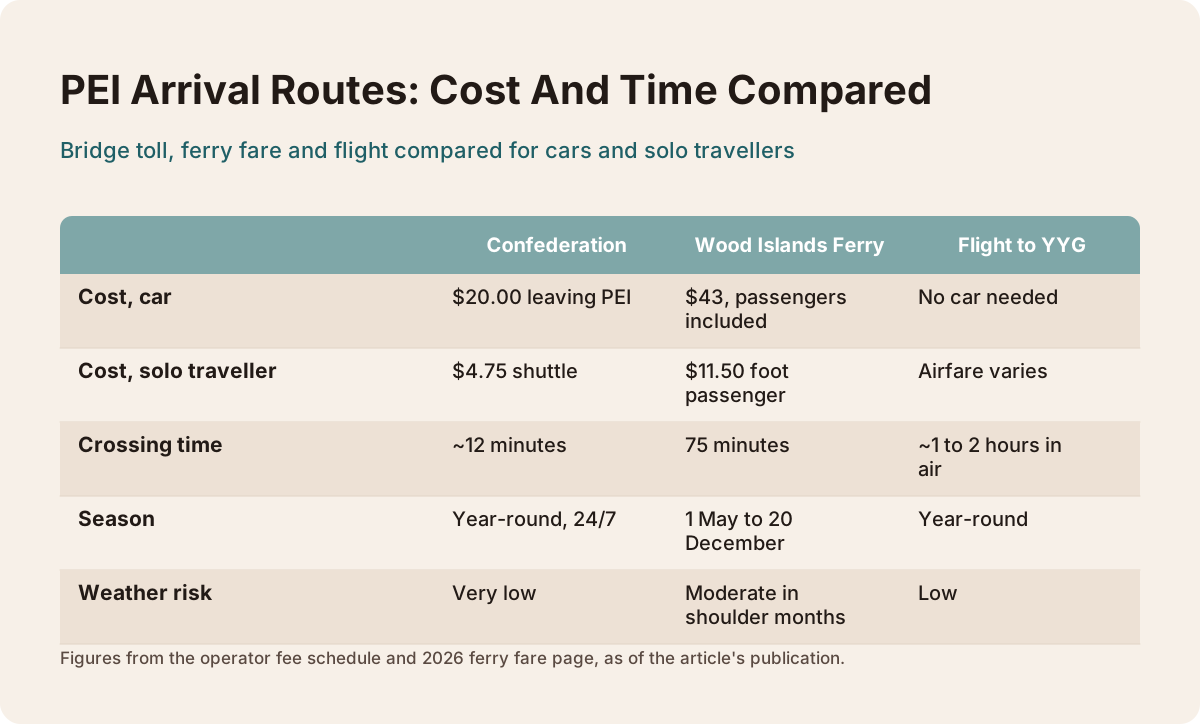
The cheapest plan depends on your starting point. From Halifax, the ferry adds no meaningful distance: the drive to Caribou is roughly the same length as the drive to the bridge, and the crossing replaces two hours of road. From Montreal, Toronto or the New England states, the bridge is on the way and the ferry is a detour of several hundred kilometres. From within the Maritimes, compare the two honestly: the ferry's $43 buys a boat ride and a rest, while the bridge's $20.00 buys twelve minutes and a view of the Strait from above.
One cost nobody else mentions: the Charlottetown accommodation levy rose from 3 percent to 4 percent on 1 January 2026, applying to hotels, bed and breakfasts and short-term rentals. It is small, but it appears on every lodging bill in the city, so budget an extra dollar per hundred on your room.
The ferry versus bridge question gets a deeper treatment in its own article, including the standby trick that makes the Nova Scotia to PEI leg free for flexible drivers.
Can You Arrive By Cruise Ship?
Yes. Port Charlottetown expects 79 ship calls and 167,954 cruise visitors in the 2026 season, with calls running into early November. The port set its record in 2024 with 94 ships. Cruise passengers dock within a ten minute walk of downtown Charlottetown, which means walking tours, food tours and boat trips all start effectively at the gangway.
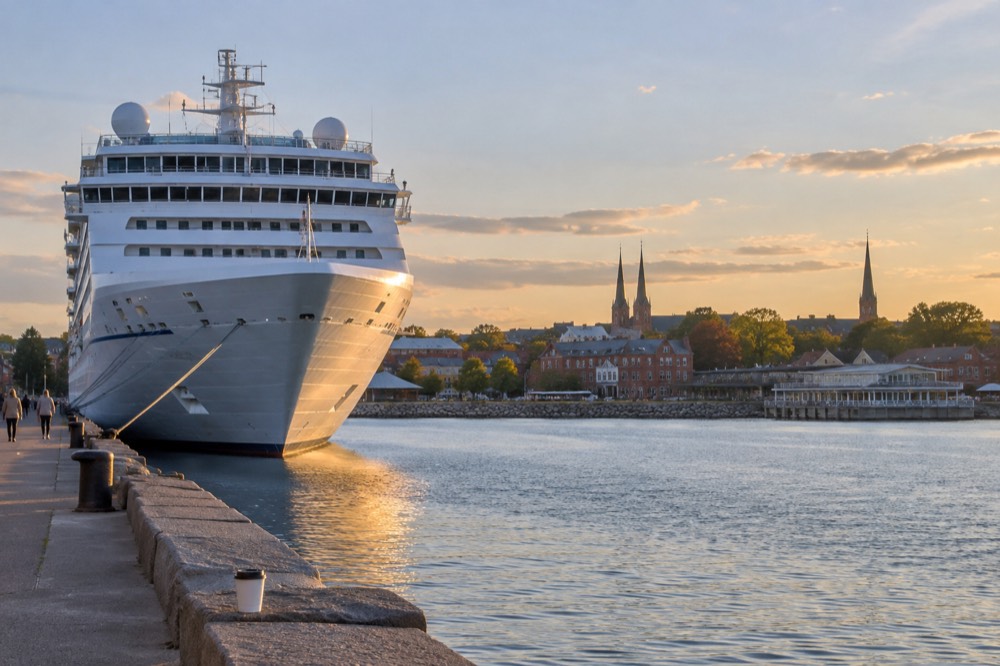
Cruise arrival is the one route that requires no planning of tolls, fares or driving at all. The ships tie up at the downtown waterfront, and the port's published schedule shows calls continuing to 2 November 2026. Large vessels including ships carrying close to 2,900 passengers call regularly through September and October.
The catch is time. Most calls give passengers roughly six to nine hours ashore, which is enough for a half-day tour to Green Gables and the Cavendish coast, or a walking tour plus a harbour cruise, but not enough for both the north shore and the east end. Our Charlottetown shore excursions guide ranks the tours that fit a port day, including which ones guarantee return-to-ship timing.
The port's own advice to shoulder-season arrivals is to dress in layers, especially in May, June, September and October, which is also the advice for anyone touring the Island in those months. Two-ship days are the busy ones: when 5,000 visitors land at once, the small-group tours sell out first, and the independent traveller who pre-books wins the day.
For a cruise passenger who wants maximum flexibility, the self-guided audio walking tour is the natural fit: $9.57 per person, 1 to 2 hours at your own pace, 4.8 from 9 reviews, and it starts whenever you walk off the ship.
Do You Need A Car Once You Arrive?
Not necessarily, but it helps. The Island is 224 kilometres end to end, driveable in about 3 to 4 hours, and every location sits within two hours of Charlottetown. Tours with hotel pickup cover the major sights from a Charlottetown base, and the compact downtown is walkable. A car becomes valuable only for the lighthouse coasts, the fishing villages and the beaches beyond the national park corridor.

The car-free itinerary works better on PEI than almost anywhere in rural Canada, and it works because of the pickup-included tour format. The flagship example is the Green Gables House tour at $87.61 per person, 4 hours, rated 4.6 from 505 reviews, which collects you in Charlottetown and returns you there. Stack a morning walking tour, an afternoon Anne tour and an evening harbour cruise, and a week in Charlottetown covers a surprising share of the Island.
The car itinerary wins on freedom. The things to do guide spans the points east and north cape drives, the oyster bars of St. Peter's Bay and the west coast sunsets, and those are the days a vehicle earns its keep. Rental cars are available at the airport and in the city, though July and August demand pushes early booking.
The middle path is the bus. Scheduled coach tours run the north shore loop from Charlottetown, and our Prince Edward Island bus tours guide compares them, including the no-pickup options that start in Cavendish for travellers already staying near the park.
Whatever you decide about wheels, the pickup-included Green Gables tour is the one most visitors book first: $87.61 per person for 4 hours, 4.6 across 505 reviews, and it removes the arrival question entirely.
When Is The Best Time To Make The Crossing?
May through October carries roughly 86 percent of the Island's annual visitor spending, and the tour inventory follows that clock. The national park's facilities close from mid-October to mid-May, the ferry stops on 20 December, and Green Gables shuts for winter on 31 October. July and August are peak; September offers full services with thinner crowds, and late spring is quietest.
The seasonality numbers come from Tourism PEI's own accounting: November through April accounted for 14 percent of annual non-resident visitor spending in 2024, up from 10 percent in 2019, so the off-season is growing but remains small. The province welcomed a record 1.87 million non-resident visitors in 2025, a 10 percent increase over 2024, and paid overnight stays hit a record 1,126,108. Peak-season hotel occupancy ran around 98 to 99 percent in July and August 2025, which is the number that should worry anyone booking late.
For arrival planning, three windows matter. July and August bring full services everywhere, every tour running, every lighthouse open, and every hotel full; book the crossing, the room and the tours together, early. September brings the Fall Flavours food festival from 24 September to 10 October, warm sea days, and tour seats that are easier to get; the ferry still runs its full eight-sailing schedule to 17 October. May and June are the quietest, with the park opening its facilities from mid-May and Green Gables open from 1 May, but some seasonal operators start late.
Winter arrival is possible but narrow: the bridge runs year-round, the airport flies year-round, and the ferry sails only to 20 December. The full seasonal picture, including month-by-month trade-offs, is in our best time to visit guide.
How Do You Plan Tours Around Your Arrival Point?
Match the tour to where you land. Bridge arrivals at Borden-Carleton are 45 minutes from Charlottetown and central to both shores. Ferry arrivals at Wood Islands are best positioned for the lighthouse east, then Charlottetown. Flight and cruise arrivals land in the city, where pickup-included tours start. Every tour on the Island departs from, or passes through, Charlottetown.

The Island's tour geography is simpler than it looks. Charlottetown is the hub, the Cavendish and north shore sights sit 30 to 45 minutes northwest, and the eastern lighthouse coast runs 40 to 90 minutes east. A traveller arriving by ferry at Wood Islands can tour the east end on arrival day, sleep in Charlottetown, and take a north shore tour the next morning without backtracking. A traveller arriving by bridge can do the reverse.
Price bands are wide enough to plan around. Walking tours of Charlottetown run from $20.14 to $21.35 per person for two hours. The small-group Anne tours run $114.37 per person for 4 hours with pickup, while the express version covers the Cavendish cliffs in 3 hours 30 minutes for $72.87. Private tours for a whole vehicle run $533.63 to $850.00 per group of five or six, which works out to roughly $89 to $142 per person at full occupancy, competitive with the shared tours for families. The full breakdown, including per-group math, lives in our Prince Edward Island tour prices guide.
Booking timing matters in peak season. With 98 to 99 percent hotel occupancy in July and August and cruise days adding thousands of walk-up customers, the small-group and private formats sell out first. The operators on this site generally offer free cancellation on the live listing, so the low-risk play is to book the anchor tour before you leave home and adjust later if your plans shift.
For most first-time visitors, the anchor is the small-group Anne tour: $114.37 per person, 4 hours with pickup included, 4.6 from 375 reviews. It pairs naturally with a second day built around the harbour, and a day in Charlottetown needs no car at all.
For travellers combining provinces, the tours from Halifax guide covers the multi-day options that handle the crossing for you, and Prince Edward Island Tours covers the full inventory of what to do once you are across.
Common Questions About Getting To Prince Edward Island
Do you pay the Confederation Bridge toll both ways?
No. The $20.00 passenger-vehicle toll is collected only when leaving Prince Edward Island, at the toll plaza in Borden-Carleton. Arriving over the bridge costs nothing, and the charge is calculated on a round-trip basis regardless of your entry point.
Is the Wood Islands ferry cheaper than the bridge?
On paper the ferry costs $43 for a vehicle and passengers versus the bridge's $20.00 toll, but the comparison depends on your route. From Nova Scotia the ferry adds no distance and standby crossings from Caribou to Wood Islands are free. From New Brunswick or points west, the bridge is both cheaper and faster.
Do you need a passport to enter Prince Edward Island?
Canadian citizens need no passport to cross the bridge, ride the ferry or fly domestically. Visitors arriving from the United States or overseas need the same documentation as for any entry to Canada. US citizens should carry a passport; the full answer is in our article on US entry requirements.
Can you get to PEI without a car?
Yes. Fly into Charlottetown and use pickup-included tours: the Green Gables tour at $87.61 per person collects in the city, and walking tours of downtown start at $20.14 per person. The compact province means no tour destination is more than about two hours from the capital.
When does the ferry stop running?
The Wood Islands ferry's 2026 season runs to 20 December, with the full eight-sailing daily schedule to 17 October and a reduced four-sailing schedule from 18 October. The Confederation Bridge and Charlottetown Airport operate year-round.
How long does it take to drive across Prince Edward Island?
The province is 224 kilometres end to end, and Tourism PEI's own guidance is that you can travel from one end to the other in about 3 to 4 hours. Any single location on the Island sits within roughly two hours of Charlottetown.