Is It Cheaper To Take Ferry Or Bridge To PEI?
A cost comparison of the Confederation Bridge and the Wood Islands ferry for reaching Prince Edward Island, with current tolls, fares and timing trade-offs.
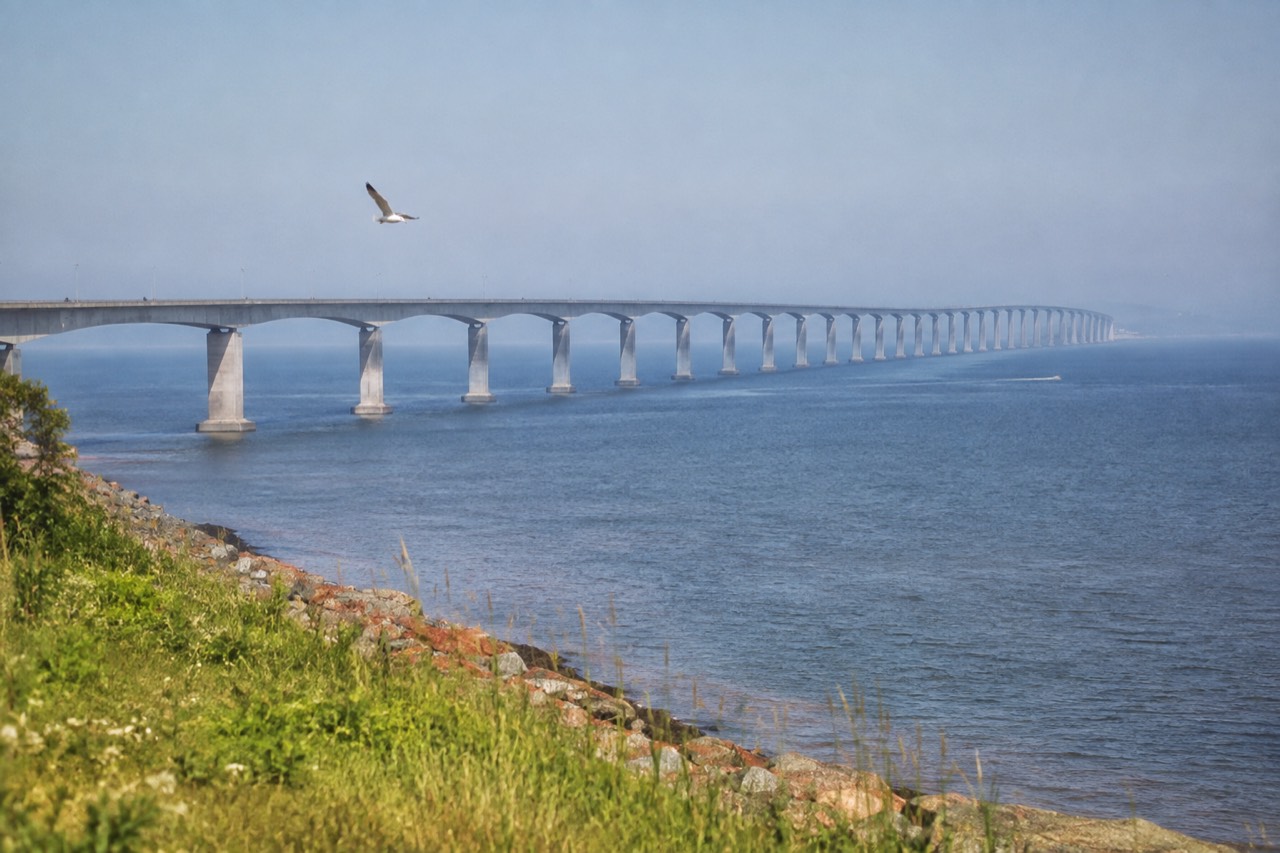
Is It Cheaper To Take Ferry Or Bridge To PEI?
For a standard car, the bridge is the cheaper crossing: $20.00 per vehicle, charged only when you leave the Island at Borden-Carleton. The Wood Islands ferry costs $43 for a vehicle with all its passengers included, and that fare is paid on the Nova Scotia to PEI leg, though standby travel in that direction can be free. The gap is $23 per car, and foot passengers flip the math entirely.
The honest answer starts with a correction, because most travel content still quotes a bridge toll of roughly $50. That number died on 1 August 2025, when the federal government cut the toll from $50.25 to $20.00 for all vehicles. The official announcement is unambiguous, and the bridge operator's own tolls and fees page now lists $20.00 for the first two axles, tax-exempt, charged on the round trip regardless of where you entered the Island.
The ferry saw the same treatment. A 50 percent federal fare cut took the standard vehicle fare from roughly $86 down to $43, passengers included, on the operator's published 2026 fare table. So both crossings are far cheaper than the figures most comparison articles still carry, and the choice between them has become less about money and more about direction, timing and what you want the crossing itself to be.
If you are planning tours on Prince Edward Island once you arrive, the crossing decision quietly sets your first available tour slot, which is why it belongs alongside any shortlist of island tours. A traveller who lands at 11am and one who lands at 5pm are booking completely different first days, even at identical cost.
What Does The Confederation Bridge Crossing Cost?
The bridge charges $20.00 for a passenger vehicle, calculated on the round trip and collected only when leaving Prince Edward Island at the toll plaza in Borden-Carleton. You pay nothing on arrival. Motorcycles also pay $20.00, the toll is tax-exempt, and no reservation is needed because the bridge runs 24 hours a day, every day of the year.
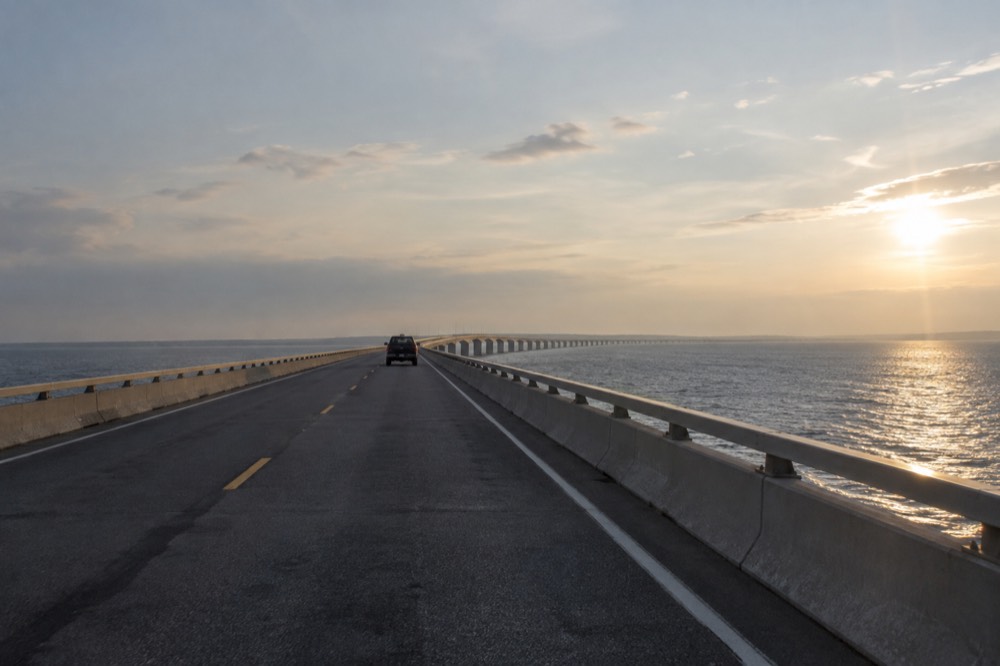
The payment direction is the detail people remember years later. Arriving on PEI over the bridge, you simply drive through. The charge lands on the way out, at the plaza on the PEI side, and it covers the round trip by axle count. A family that never checks the math before departure gets a single $20.00 charge on their final day, which is why the crossing feels free on the way in. Budget travellers sometimes forget to reserve that $20 for the exit and are caught short at the plaza, so treat it as a guaranteed end-of-trip expense rather than a maybe.
For anyone without a car, the bridge operator runs a shuttle service for pedestrians and cyclists. The posted rates are $4.75 round trip for a pedestrian and $9.50 for a cyclist, with a first bag free and each additional bag at $4.25. Those are niche options, since the bridge is 12.9 kilometres long and not walkable, but they exist and they are cheap. The shuttle exists because the span is closed to foot traffic, a wind-exposed highway deck with no sidewalk, so the van is the only human-powered way across.
The bridge's other advantage is schedule freedom. It never closes for season, never sells out and never leaves you waiting for a sailing time. The drive across takes roughly ten to twelve minutes, and from the New Brunswick side you are about an hour from Summerside and under two hours from Charlottetown. That is the whole case for the bridge: it is cheap, instant and always available. In winter, when the ferry has stopped sailing entirely, it is not even a choice, it is the only road on and off the Island.
What Does The Wood Islands Ferry Cost?
The ferry charges $43 for a standard vehicle up to 20 feet long and 7 feet high, with all passengers included, and the fare is sold on the Caribou, Nova Scotia to Wood Islands, PEI leg. Standby travel from Nova Scotia to PEI is free of charge, boarding subject to availability. An adult foot passenger pays $11.50.
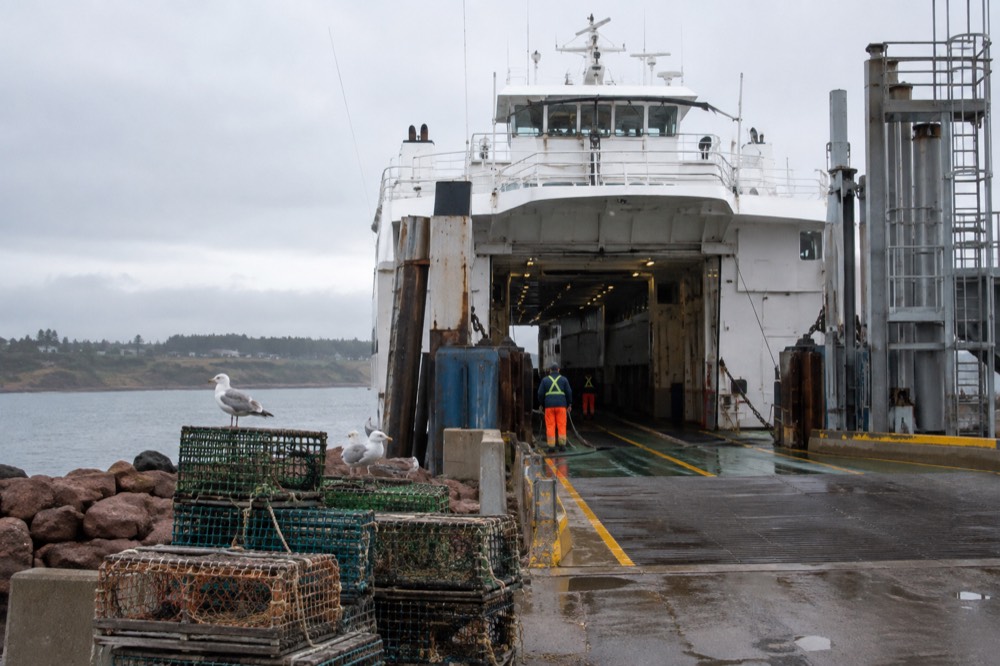
The fare structure rewards a particular itinerary: arrive by ferry from Nova Scotia, leave by bridge. Since the ferry fare is collected on the Nova Scotia to PEI direction and the bridge toll is collected on the PEI exit, a loop trip through both provinces pays $43 once and $20.00 once, and the standby option on the inbound ferry leg can remove even that $43 if you are flexible and the boat has space. Travellers who plan the loop deliberately end up paying the minimum possible for both crossings, and they get to experience the ferry as an arrival rather than a departure.
| Crossing | Vehicle cost | Foot passenger | When you pay | Season |
|---|---|---|---|---|
| Confederation Bridge | $20.00 per car, round trip | $4.75 shuttle | Leaving PEI, at Borden-Carleton | Year-round, 24 hours |
| Wood Islands ferry | $43, passengers included | $11.50 adult | NS to PEI leg; NS standby free | 1 May to 20 December 2026 |
Two ferry facts matter as much as the price. First, the season: the 2026 season runs to 20 December, with eight sailings each way daily through the peak schedule and a reduced schedule after mid-October. Second, the crossing itself takes 75 minutes, which is either wasted time or the best hour and a quarter of your drive, depending on your temperament. Reservations are not mandatory but are strongly recommended if you need a guaranteed spot; standby boarding is not guaranteed and is sorted by vehicle type and height rather than a simple queue.
The ferry also drops you at Wood Islands, in the island's southeast corner, roughly 45 minutes from Charlottetown and close to the Points East Coastal Drive, which is convenient if lighthouse country is your first stop. Our lighthouse tours guide covers that shore in detail, and the ferry arrival puts you within easy reach of several of the community-run lighthouse museums that open there in summer.
Which Crossing Should You Pick For A Short Trip?
For a car trip of three days or less, the bridge wins on both cost and time: $20.00 versus $43, and a twelve-minute crossing versus a scheduled 75-minute sailing plus check-in. For a Nova Scotia loop, take the ferry north and the bridge home, paying each fare once. For foot travellers and cyclists, the ferry's $11.50 adult fare beats the bridge shuttle on experience and simplicity.
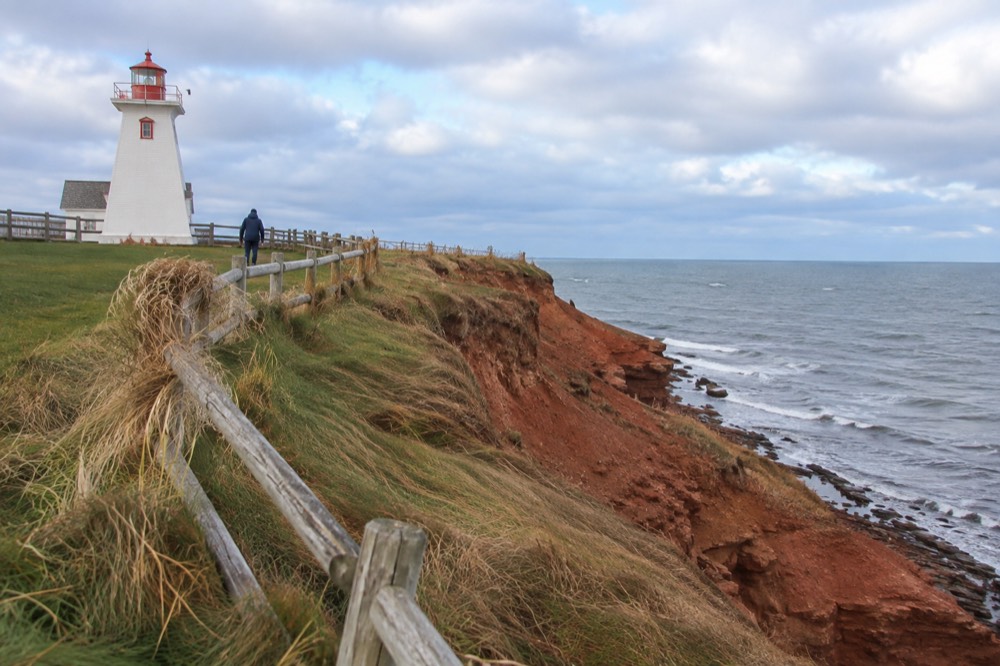
The timing question is where the ferry earns its keep. A morning sailing from Caribou puts you on PEI before lunch, which is enough time to reach Charlottetown, check in and make an afternoon tour. The bridge gives you that freedom every single hour of the day, but it gives you nothing to do on the way over. Travellers who take the ferry consistently describe the crossing as part of the holiday; travellers who take the bridge describe it as a road. Neither view is wrong, they are just buying different things with the same $20 to $43.
Here is the practical wrinkle that connects this question to tour planning: your arrival time decides which tour slot you can realistically hold on day one. An afternoon North Shore tour needs you on the Island by early afternoon at the latest, and the ferry's fixed sailing times make that a tighter calculation than the bridge's open schedule. Miss the 11:45 sailing and the next one is 13:30, which turns a planned 2pm tour departure into a race.
The North Shore Bus Tour, at $106.73 per person for about 4 hours with no pickup required, is a good example of a tour that rewards an early arrival, since it leaves from a central Charlottetown meeting point and covers Cavendish and the shore roads. It carries a 4.8 rating from 10 reviews, a small pool but a strong one, and it is priced per person like most of the Island's roster.
If you land later in the day, a self-guided option fills the gap instead. The self-guided audio walking tour of Charlottetown costs $9.57 per person and runs on your own schedule, which makes it the natural day-one activity for a ferry arrival that slips into the evening. It is the cheapest tour-format product on the Island's roster and it asks nothing of you except a phone and a pair of shoes.
Does The Crossing Choice Change Your First Day Of Touring?
Yes, mainly through the clock. The bridge lets you arrive at any hour and still reach Charlottetown within about two hours of landing, so any same-day tour is possible. The ferry's fixed sailings mean a missed boat can cost you an afternoon, so ferry travellers should book day-one tours for late afternoon or evening, or leave the first day open.
The two-hour rule is worth internalizing: Tourism PEI's own guidance is that any Island location is within two hours of Charlottetown, and the province is only 224 kilometres end to end, roughly a three to four hour drive. Nothing on PEI is far from anything else, so the crossing is the single longest fixed block of travel time in most itineraries. Once you are over the water, distances stop being a planning problem, and the Island's small size becomes the thing that makes tight tour schedules work.
Ferry travellers should also watch the seasonal schedule shape. Through the peak summer schedule there are eight daily departures each way, from a 07:00 sailing to an 18:30 sailing, so the penalty for a late arrival is a next-morning boat rather than a stranded night. After mid-October the schedule drops to four sailings each way, and by late December the season ends entirely, which makes the bridge the only realistic winter option. Anyone visiting in November or early December still has a ferry option: a reduced schedule runs 18 October to 20 December 2026, with four sailings each way daily.
For cruise passengers and day-trippers the question barely arises, since they arrive by ship at Port Charlottetown, which expects 79 calls and 167,954 cruise visitors in 2026. But anyone building a Halifax-and-PEI itinerary should read our guide to tours from Halifax, where the ferry-versus-bridge choice is a genuine routing decision rather than a footnote, since the drive from Halifax reaches the Caribou ferry terminal hours before it reaches the bridge.
Is The Ferry Or The Bridge Better With Kids, Bikes Or No Car?
Foot passengers and cyclists should take the ferry: an adult pays $11.50 and a bicycle $11, versus the bridge shuttle's $4.75 pedestrian fare on a vehicle-only crossing with no scenery. Families with a car save $23 on the bridge and gain schedule freedom. Cyclists touring the Island usually ferry in and bridge out, or the reverse, to ride one crossing and shuttle the other.

For cyclists, the combination is genuinely elegant. The ferry carries a bicycle for $11 and delivers you to the quiet southeastern corner of the Island, close to the Confederation Trail network that spans the province. Ride the Island for a week, then exit over the bridge using the $9.50 cyclist shuttle, which loads you and the bike into a van for the 12.9 kilometre span. Our cycling guide covers what that trail network actually looks like, including the e-bike rules that apply on it between April and November.
Families should note the ferry's child pricing: youth aged 6 to 13 pay $8 and children 5 and under travel free, while the vehicle fare already includes every passenger in the car. A family of five in one vehicle pays $43 total on the ferry, full stop, which narrows the bridge's $23 advantage to almost nothing once you value the 75-minute sailing as an activity rather than a delay. Kids on a ferry get a deck, a snack bar and a horizon; kids on the bridge get ten minutes of guardrail.
One caution that applies to both crossings: build your departure day with slack. The bridge toll plaza can queue on peak Sunday afternoons in summer, and the ferry's final sailings fill up in late December before the season closes. Neither is expensive, both are popular, and the cheapest crossing of all is the one you did not have to rebook. A missed ferry on your exit day can mean an unplanned night on the Island, which costs far more than the $23 you saved by choosing it.
Common Questions About Getting To PEI By Ferry Or Bridge
Is It Cheaper To Take Ferry Or Bridge To PEI?
For a car, the bridge is cheaper: $20.00 per vehicle leaving the Island, versus $43 for the ferry with all passengers included. The ferry can be free on standby from Nova Scotia to PEI, and foot passengers pay $11.50, so the answer depends on your vehicle and direction of travel.
Do you pay the Confederation Bridge toll both ways?
No. The $20.00 toll is calculated on a round-trip basis but collected only once, when you leave Prince Edward Island at the toll plaza in Borden-Carleton. Arriving over the bridge costs nothing at the gate.
Is the Wood Islands ferry free in one direction?
Standby travel from Nova Scotia to Prince Edward Island is free of charge, but boarding is subject to availability and is not guaranteed. A reserved round-trip or one-way fare, $43 for a standard vehicle with passengers included, guarantees your spot.
Does the ferry run all year?
No. The 2026 season runs to 20 December, with eight daily sailings each way on the peak schedule and a reduced schedule through the final weeks. The bridge runs 24 hours a day, year-round.
Can you walk or cycle over the Confederation Bridge?
Not on your own. The bridge carries vehicles only, but the operator runs a shuttle at $4.75 round trip for pedestrians and $9.50 for cyclists, with baggage fees for extra bags.
Which crossing is faster?
The bridge. The drive over takes minutes, and you can cross at any hour without checking a schedule. The ferry crossing itself takes 75 minutes, plus check-in time and the fixed sailing times that constrain your departure.
Whichever crossing you choose, the money question is smaller in 2026 than it has been in years, and the planning question, arrival time and first tour slot, is where the real decision lives. More arrival logistics and tour options are mapped across Prince Edward Island Tours, from the ferry-and-bridge basics to what you can actually book once you land.