What Is PEI Most Famous For?
Prince Edward Island is famous for Anne of Green Gables, red soil, potatoes, lobster and oysters, and the Confederation Bridge. Here is what each one actually is, with current figures.
What Is PEI Most Famous For?
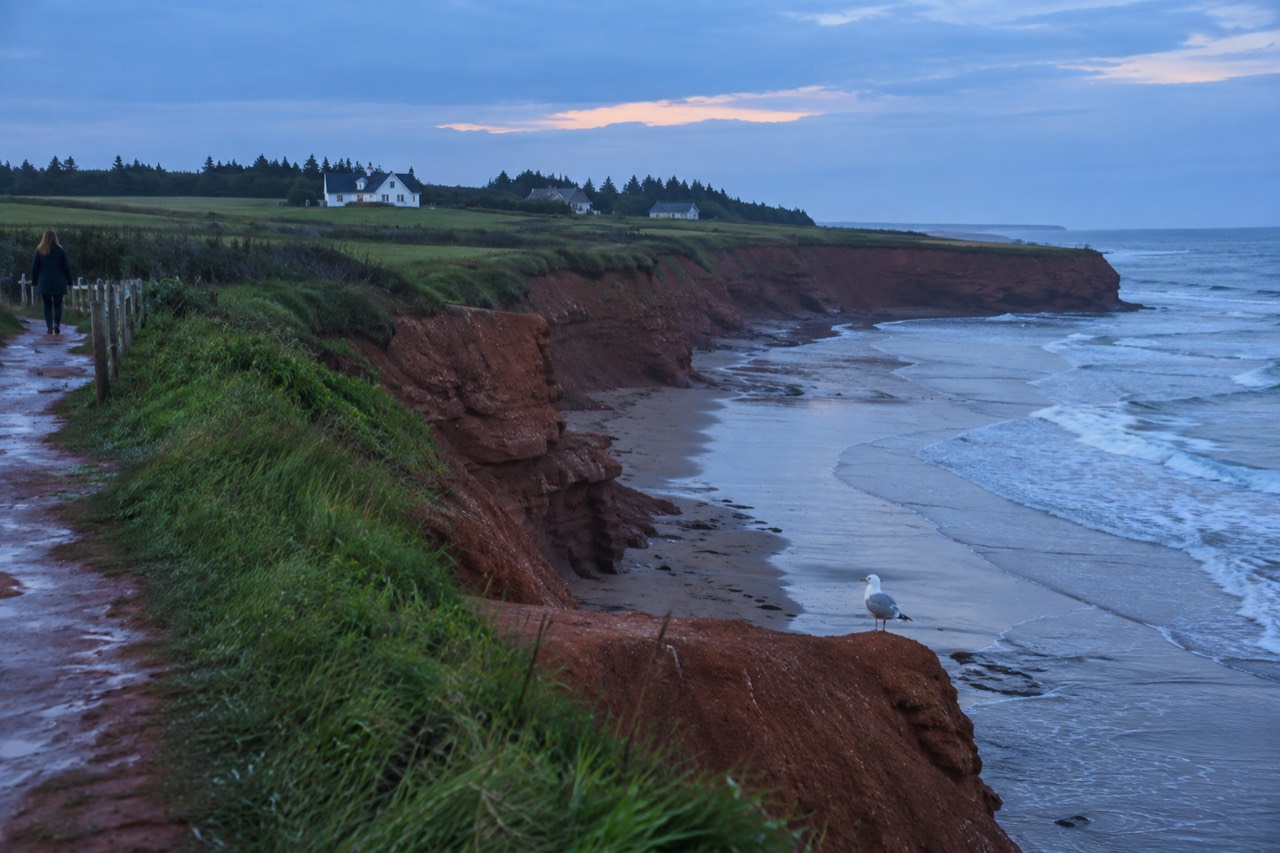
Prince Edward Island is most famous for Anne of Green Gables, the 1908 novel by Lucy Maud Montgomery that draws visitors from around the world to the Cavendish farmhouse that inspired it. Close behind come the Island's red iron-rich soil and potato farms, its lobster and oysters, the 12.9-kilometre Confederation Bridge, and the red-sand beaches of its national park.
The Anne claim is not a vague travel-brochure sentiment. Green Gables Heritage Place in Cavendish recorded 175,000 visitors in 2024, an 11 percent increase over 2023, and by late July of the 2025 season it had already passed 58,000 visitors, up nearly 20 percent on the same period the year before. No other Canadian literary site draws crowds of that size to a province of roughly 181,715 residents, the official Statistics Canada estimate for April 2026. In 2025 the Island as a whole welcomed 1.87 million non-resident visitors, more than ten times its own population.
The second half of the fame story is physical rather than literary. The Island's red soil, the Charlottetown soil series, covers roughly 470,000 acres and gets its colour from iron oxide, and that same rust tone runs through the sandstone cliffs and the beaches. The province is Canada's smallest, 224 kilometres end to end, and Tourism PEI's own framing is that any location on the Island sits within two hours of Charlottetown. That compactness is a large part of why the famous things are all reachable on a single day's drive.
If you want to see the literary and landscape halves of that fame in one outing, these are the three tours that map most directly onto the question:
The rest of this article takes each pillar of the Island's reputation in turn, with the verified numbers behind it.
Why Anne Of Green Gables Is The Island's Signature
Anne of Green Gables, published in 1908 by Island-born author Lucy Maud Montgomery, is the single most famous thing about Prince Edward Island. The Cavendish farmhouse that inspired it is now Green Gables Heritage Place, a Parks Canada site that drew 175,000 visitors in 2024 and runs daily from 1 May to 31 October, 9am to 5pm.
Montgomery grew up in Cavendish and set the novel there, though she called the village Avonlea. The book's reach is genuinely international: it has been part of the Japanese school curriculum since 1952, and tour operators on the Island still run specialized Anne-themed group tours for Japanese visitors, a market that reports describe as recovering strongly. A new anime adaptation aired in 2025, and the stage musical has played Charlottetown every summer for decades, running at the Confederation Centre of the Arts through the summer season with a 26-member company and a 14-piece live orchestra.
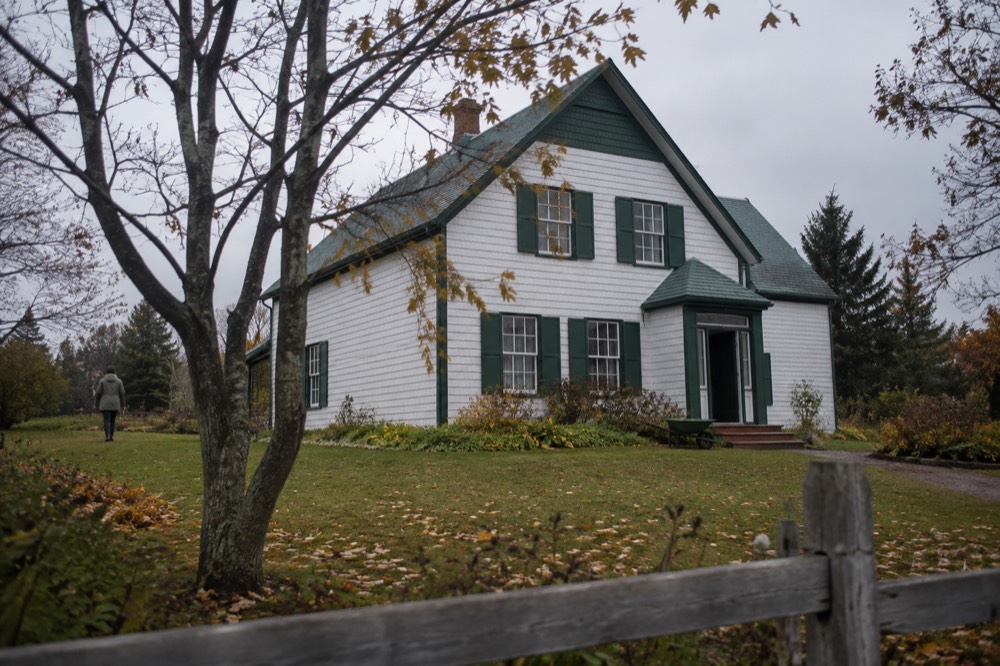
The practical point for a visitor is that the fame is concentrated in one small area. Green Gables Heritage Place sits in Cavendish, on the Island's north shore, about 30 minutes from Charlottetown. Parks Canada keeps the site open daily 1 May to 31 October, and admission is $10.00 for an adult in high season, free for youth 17 and under. The grounds hold the restored house, the Haunted Wood trail and Balsam Hollow trails that appear in the novel, and a visitor centre. In 2026 the visitor centre also hosts a new art exhibit, "L.M. Montgomery and the Spirit of Place", featuring works by Island artist Susan Christensen, running daily from June to October, so even a repeat visitor will find something new inside.
Admission to the site was free under the Canada Strong Pass through 7 September 2026, with regular fees resuming 8 September, so check the current fee before you go. A good starting point for planning is our Anne of Green Gables tours guide, which compares every way of reaching Cavendish from Charlottetown.
The most direct way to see the Anne country without a rental car is a scheduled bus tour. The North Shore Bus Tour runs four hours from Charlottetown through the Cavendish area for $106.73 per person, rated 4.8 from 10 reviews on the live listing. It covers the Green Gables area and the north shore landscapes in one loop, which is essentially the itinerary the Island is famous for.
Red Soil, Potatoes And The Farmland
Prince Edward Island's red soil is its most visible trademark. The Charlottetown soil series covers roughly 470,000 acres and owes its colour to high iron-oxide content, and that same red runs through the sandstone cliffs and the beaches. The soil underpins the second thing the Island is famous for: potatoes, grown on a scale that makes PEI Canada's most potato-dependent province.
The red fields are not just scenery. Potato production is the backbone of Island agriculture, though it is weather-sensitive: the 2025 harvest came in at 21.8 million hundredweight, down 15.9 percent from the previous year because of drought. Drive any rural road between Charlottetown and the north shore in summer and you will pass rolling red fields in crop rows, with the blue of the Gulf beyond them. That exact view, green rows on red earth against the sea, is the image on most PEI postcards.
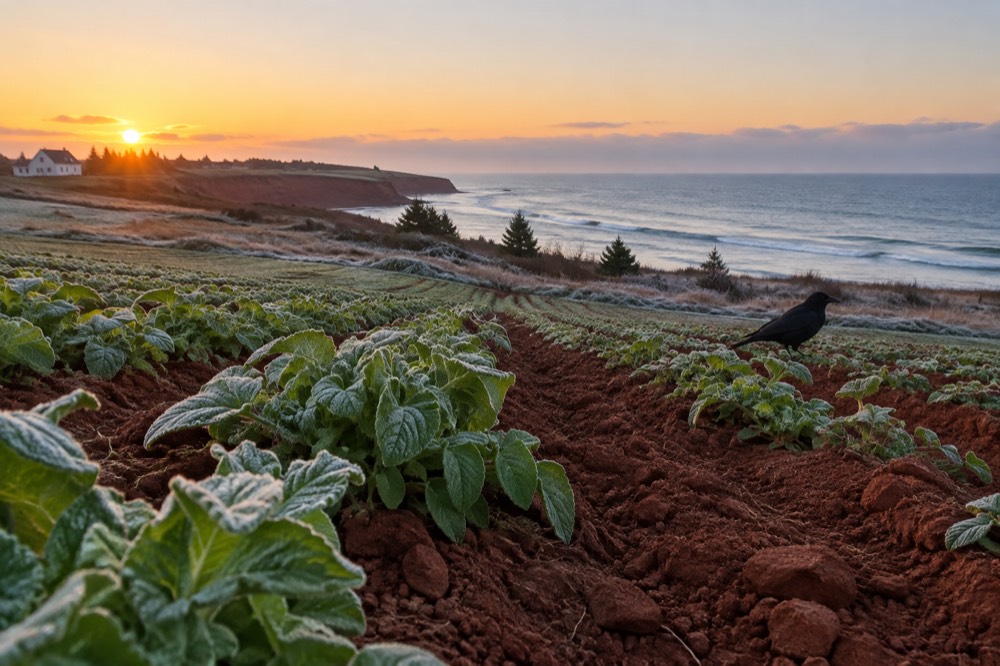
The soil and the sea sit unusually close together. Canada's smallest province has more than 90 beaches along over 1,000 kilometres of coastline, and nowhere on the Island is far from water. That proximity is why the famous food and the famous landscape are the same story: the red soil grows the potatoes and the pasture, and the cold Gulf water grows the shellfish. It also explains the Island's other agricultural reputation, as a golf destination, with nearly 400 fairways across roughly 30 courses threaded through the same rolling farmland.
Lobster, Oysters And The Food The Island Is Known For
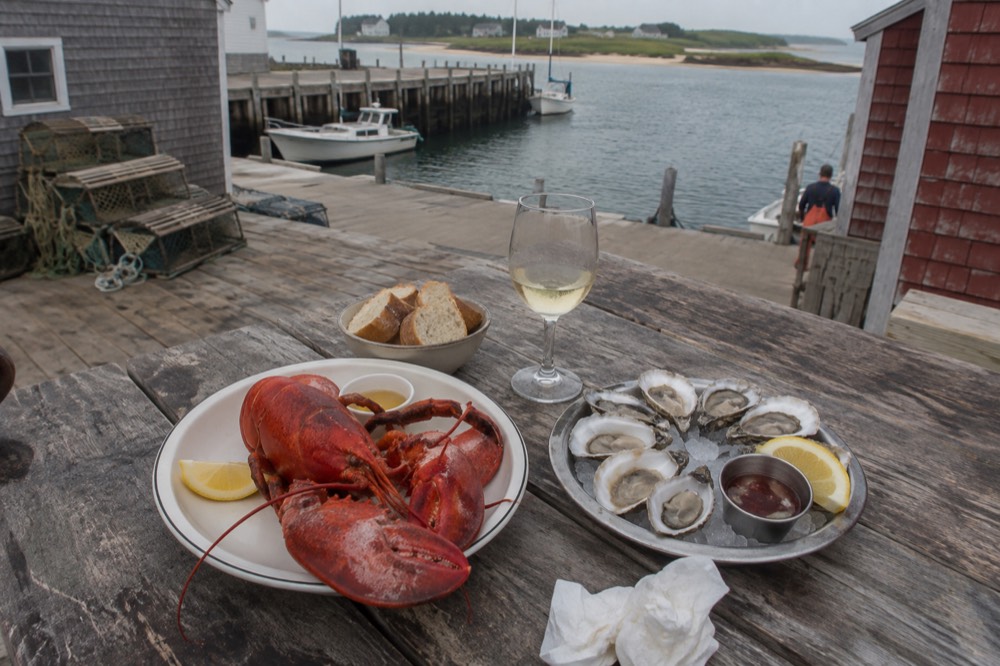
PEI is famous for two shellfish above all: lobster and Malpeque oysters. There is no single lobster season on the Island; the spring fishery runs late April to late June in zones LFA 24 and 26A, and a second autumn fishery, LFA 25, runs 10 August to 11 October 2026. Farmed oysters, which supply most restaurants, are harvested year-round, including through winter ice.
The lobster numbers are large. Preliminary 2025 landings totalled 45 million pounds with a landed value over $355 million, and the spring 2026 shore price opened at $8.00 to $8.50 a pound. The oyster story has a harder edge: MSX and Dermo, two diseases detected in 2024 and 2025, have caused 50 to 95 percent mortality in affected western PEI beds, hitting a roughly $27 million industry, with $4.2 million in federal support announced to help harvesters adapt. A Malpeque oyster on a plate in July is still normal and legal, because farmed oysters are exempt from the wild fishery's close times. The rest of the planning pages sit on Prince Edward Island Tours.
| Food | What PEI is known for | When it is at its peak |
|---|---|---|
| Lobster | Spring fishery (LFA 24, 26A) late April to late June; autumn fishery (LFA 25) 10 August to 11 October 2026 | Fresh from the wharf during both seasons |
| Oysters | Malpeque oysters, mostly farmed | Farmed oysters year-round; wild public fishery 15 September to 30 November |
| Potatoes | 21.8 million hundredweight harvested in 2025 | Stored and shipped all year |
| Mussels | 34.4 million pounds landed in 2024, $29.3 million value | Farmed and available year-round |
If the food is what draws you, the food PEI is known for goes deeper, and our Charlottetown food and oyster tours guide lists the walking tastings that put the shellfish in context. The PEI International Shellfish Festival, the 30th edition, runs 17 to 20 September in Charlottetown, and the Fall Flavours festival follows from 24 September to 10 October. The Inn at Bay Fortune, near Souris, even placed on Canada's 100 Best Restaurants list for 2026, a rare national nod for a restaurant on an island this size.
The Confederation Bridge
The Confederation Bridge, opened 31 May 1997, is 12.9 kilometres long, the longest bridge in Canada and the longest in the world over ice-covered water. Crossing it costs $20.00 for a passenger vehicle, collected only when leaving the Island at Borden-Carleton, a fare cut from the old $50.25 rate effective 1 August 2025.
The bridge is a claim to fame in itself and a common piece of trivia, but the fare detail is where most guides go wrong. The toll is round-trip, charged by axle count, and you pay nothing arriving on the Island: the charge lands at the plaza in Borden-Carleton on the way out. Many pages still quote the old $50.25 figure, which has been dead since the summer of 2025. The operator's own toll page is the reference worth checking before any crossing. Bridge traffic volumes reached 990,198 vehicles in 2024, which gives a sense of how many people arrive this way rather than by air or ferry.
The alternative crossing is the Wood Islands ferry to Caribou, Nova Scotia, a 75-minute sailing that costs $43 for a standard vehicle with its passengers included, with standby travel from Nova Scotia to PEI free of charge. The ferry's 2026 season runs to 20 December. For a fuller comparison, the getting to Prince Edward Island guide breaks down both crossings, plus flights into Charlottetown Airport, which handled 391,086 passengers in 2025.
Beaches, Lighthouses And The National Park
PEI is famous for its red-sand beaches inside Prince Edward Island National Park and for having what Tourism PEI describes as one of the highest concentrations of lighthouses in North America: 61 lighthouses and range lights, one every 55 kilometres on average. The park's daily entry fee is $10.00 for an adult, $19.50 for a family group in one vehicle.
The national park strings along the north shore from Cavendish to Greenwich, and its beaches are the ones in the photographs: dunes backed by red sandstone and white sand that sings faintly underfoot at Basin Head, the so-called singing sands. Park facilities run on a summer clock, with full services in July and August and facilities closed between mid-October and mid-May. Lifeguard supervision at Cavendish and Brackley beaches covered only 26 June to 7 September 2026, a shorter window than the park season itself.
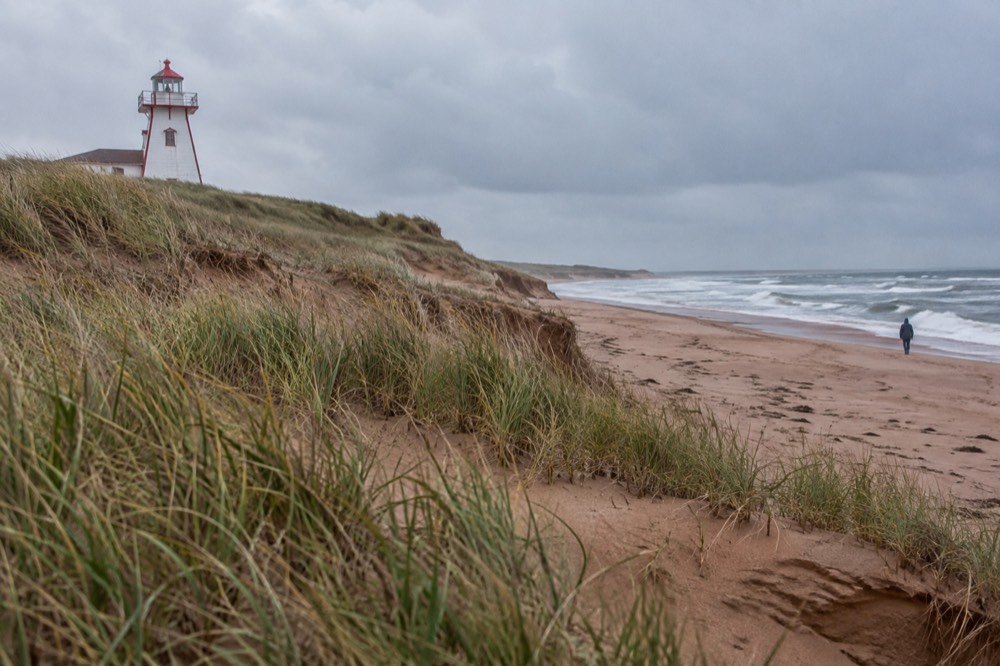
Eight of the Island's lighthouses operate as community museums in summer, including Point Prim, the oldest, built in 1845. Point Prim underwent a full exterior reshingling in 2026, its first since the 1950s, at a cost of about $300,000, and stayed accessible through the work. The lighthouse coast is also eroding: the UPEI Climate Lab has measured about 20 metres of shoreline loss near Cedar Dunes since 1999, part of a monitoring program that has run at roughly 200 sites since 2014.
Seeing The Famous Island In One Day
The compact answer to seeing what PEI is famous for: a four-hour tour from Charlottetown covers Green Gables, the Cavendish shoreline and the red farmland in a single loop, from $72.87 per person for the express version. Anything the bus tours miss, the city's own story is covered on foot for $9.57.
Because the Island is 224 kilometres end to end, the famous things cluster within a short drive of Charlottetown, and that is why the bus and van tours are so popular with visitors who arrive without a car, including cruise passengers. The Express Anne Tour runs 3 hours 30 minutes for $72.87 per person, rated 4.7 from 3 reviews, a small review pool, so read the listing's own description carefully. For a fuller comparison of every format, from private vans to hop-on style options, see things to do on Prince Edward Island.
For the city itself, the self-guided audio walking tour costs $9.57 per person and runs 1 to 2 hours at your own pace, rated 4.8 from 9 reviews. Between the bus loop and a walk downtown, most of what the Island is famous for is covered in a single day, with the food and the bridge as the add-ons that need a car or a table reservation. Visitors with more time can stretch the same loop over several days, and the question of how many days you need in Prince Edward Island is worth settling before you book anything, since the answer changes which tours make sense.
Before you book, three tours cover the question this article answers, each from a different angle:
Common Questions About What PEI Is Famous For
What Is PEI Most Famous For?
Prince Edward Island is most famous for Anne of Green Gables, the red soil and potato farms, lobster and Malpeque oysters, the 12.9-kilometre Confederation Bridge, and the red-sand beaches of its national park. Green Gables Heritage Place alone drew 175,000 visitors in 2024, which makes the Anne story the single biggest draw.
Is PEI famous for Anne of Green Gables?
Yes, and it is the Island's strongest single claim to fame. The novel was published in 1908 by Island-born author Lucy Maud Montgomery, and the Cavendish farmhouse that inspired it is now a Parks Canada site open daily 1 May to 31 October. The book has been in Japanese school curricula since 1952, which is why Japanese visitors remain a steady market.
What food is PEI most famous for?
Lobster and Malpeque oysters. The lobster fishery runs in two seasons, spring in zones LFA 24 and 26A and autumn in LFA 25 from 10 August to 11 October 2026, and farmed oysters are harvested year-round. Potatoes, mussels and the island's dairy and beef round out the food reputation.
Why is PEI soil red?
The red colour comes from high iron-oxide content, essentially rust, in the Charlottetown soil series that covers roughly 470,000 acres of the Island. The same iron tone runs through the sandstone cliffs and the sand on the beaches, which is why the whole province photographs red.
What is the most famous landmark in PEI?
The Confederation Bridge is the most famous built landmark: 12.9 kilometres long, opened in 1997, the longest bridge in the world over ice-covered water. The toll is $20.00 for a passenger vehicle, collected only when leaving the Island. Green Gables Heritage Place is the most famous visited landmark.
Is PEI worth visiting if you have not read Anne of Green Gables?
Yes. The Anne sites are one pillar of the Island's fame, but the national park beaches, the lighthouse coast, the seafood and the compact driving distances stand on their own. Non-peak visitation has grown 18 percent since 2019, largely among visitors coming for food, cycling and coastal scenery rather than the novel.