What Is The Most Famous Lighthouse In PEI?
Point Prim is the most famous lighthouse on Prince Edward Island: the province's oldest, built in 1845, and the one every south-shore drive points toward. Here is why it leads, and which other Island lighthouses are worth the detour.
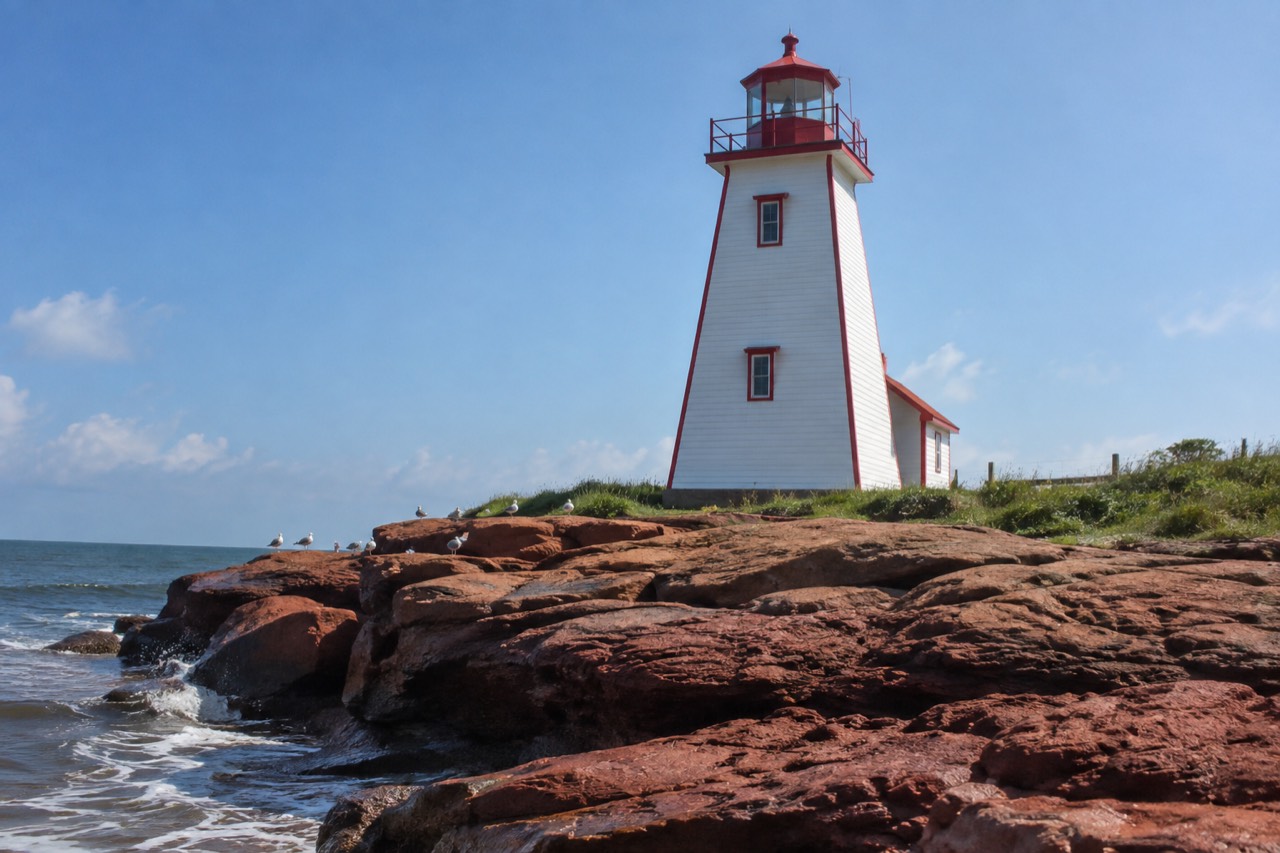
Prince Edward Island is believed to have the highest concentration of lighthouses in North America: 61 lighthouses and range lights, roughly one every 55 kilometres of coastline, according to Tourism PEI. On an island only 224 kilometres end to end, that density is part of why lighthouse hopping works as a vacation plan at all. But when Islanders and guidebooks single one out, the answer keeps coming back to the same tower on the province's south-eastern point.
What Is The Most Famous Lighthouse In PEI?
Point Prim, on the south shore at the mouth of Hillsborough Bay, is the most famous lighthouse on Prince Edward Island. It is the oldest in the province, built in 1845, and its distinctive tapering tower has guarded the marine approach to Charlottetown Harbour since the age of wooden ships. In summer 2026 it was back in the national news while its exterior wood shingles were replaced for the first time since the 1950s, a project of roughly $300,000.
The fame is not just age. Point Prim sits where the Hillsborough and Northumberland rivers meet the strait, on a spit of red sandstone that every boat approaching Charlottetown from the south has to pass. The tower itself is unusual for the region: a round, brick-cored structure tapering sharply to the top, painted white with a red lantern, unlike the square wooden towers most PEI lights use. Photographers know it as the one that looks least like every other light on the Island.
The 2026 restoration kept the site open while scaffolding wrapped the tower, with limited interior access during parts of the project. The work was the first full exterior shingle replacement since the 1950s, and CBC reported on both the start in June and the progress by mid-August. A lighthouse famous enough to make the news for getting new shingles is a lighthouse that has made it.
For visitors who want more than one light in a day, the lighthouse-dense south-eastern corner is exactly what a private tour is built for, and the roster has two strong options.
Why Point Prim Outshines The Rest
Point Prim's claim rests on three things: it is the oldest standing lighthouse in the province, it guards the historical marine gateway to Charlottetown, and it is one of the eight Island lighthouses that operate as a community museum in summer, open from 15 May to 31 October. Its 2026 shingle restoration, the first since the 1950s, put it back in headlines across the country. No other PEI lighthouse combines that age, that setting and that public access.
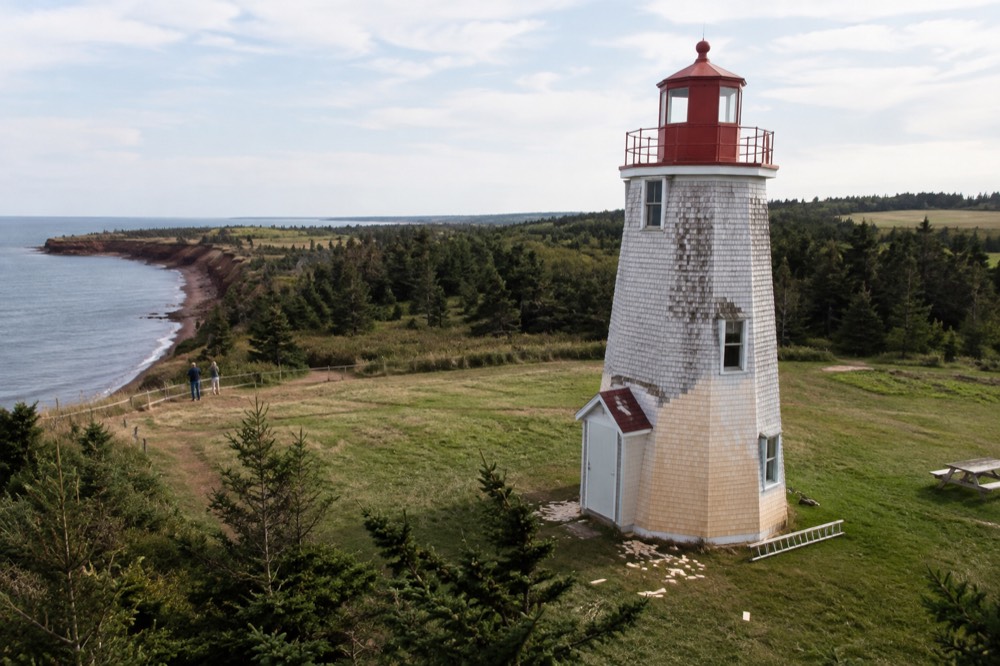
The museum operation matters. Eight PEI lighthouses run as community museums open to visitors in summer 2026, per Tourism PEI's own lighthouse listing: Point Prim (15 May to 31 October), East Point (18 May to 30 September), Panmure Island (13 June to 13 October), Wood Islands (26 June to 1 October), Cape Bear (1 July to 26 September), West Point (1 June to 10 October) and Souris East (15 June to 9 October), among others. Point Prim has both the longest season of the group and the founding date nobody else can claim.
The restoration story also says something about how the community treats the building. The roughly $300,000 project was a local fundraising and heritage effort, and the site stayed accessible to visitors while the scaffolding was up. That is worth knowing before you drive out: interior access was limited during parts of the summer, so if climbing the tower is the point of your visit, it is worth checking the current status rather than assuming.
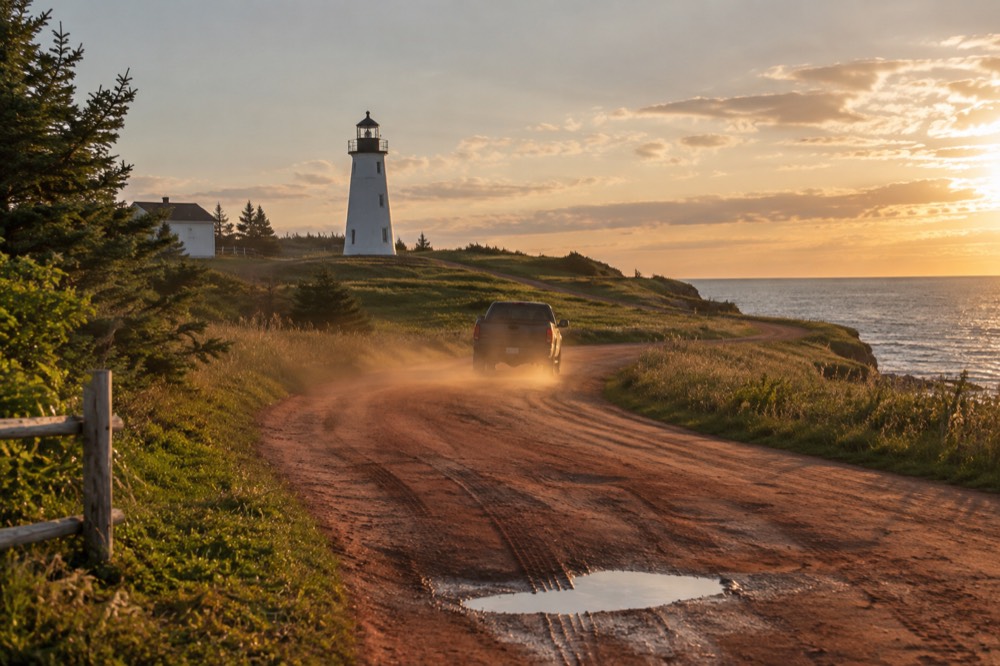
The setting rewards time, not just a drive-by. The point itself is a low headland of red sandstone with the open strait on one side and the calm of Hillsborough Bay on the other, and the light's position means the water looks different from every side of it. Visitors who arrive late in the day get the best of it, when the low sun turns the red stone the colour of the tower's trim and the ferry traffic to and from Wood Islands passes on the horizon. Bring something windproof: the point funnels whatever weather the strait is carrying.
If the plan is a lighthouse day rather than a single stop, the 7-Hour Private Lighthouse Tour covers the south-eastern coast in one loop. It runs $684.52 per group for up to six people, so about $114 each at six, and holds a 5.0 rating from a single review, a thin pool worth reading plainly: one guest, one perfect score.
The Other Contenders For The Title
West Point, Panmure Island, Cape Bear and East Point each have a genuine claim to fame: West Point is the tallest at 20 metres with an inn inside, Cape Bear received the Titanic's distress signal, and East Point marks the Island's easternmost tip where tides collide. None matches Point Prim's age or national profile, but each is a destination in its own right, and all four are open as museums in summer 2026.
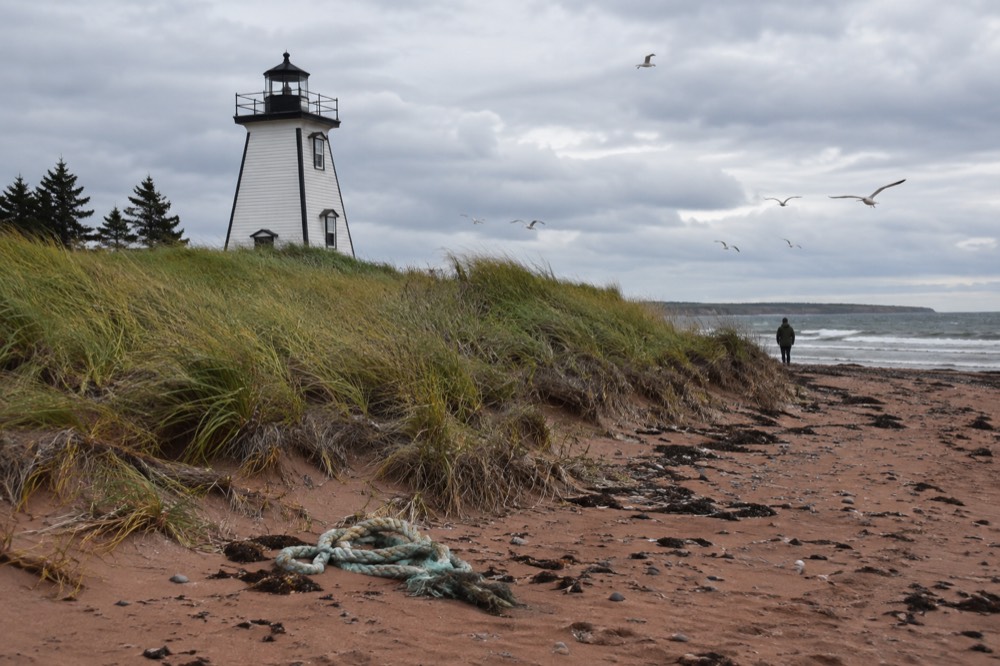
West Point, on the Island's western tip, is the one with beds. The tower is the tallest on PEI at about 20 metres, and the attached keeper's quarters operate as an inn, which makes it the only Island lighthouse you can sleep beside. It is also the light most affected by the coast itself: the Cedar Dunes area near West Point has seen roughly 20 metres of shoreline retreat since 1999, and UPEI's climate centre measured 9.9 metres of net shoreline movement at nearby Kite Point between 2020 and 2024. The lighthouse is winning its argument with the sea for now, but the beach around it is moving.
Cape Bear has the best story. The Marconi station at the Cape Bear lighthouse received the distress call from the Titanic as the liner sank in the North Atlantic, and the station is now a separate museum. The lighthouse itself runs a short season, 1 July to 26 September in 2026, and it sits on the red cliffs of the south-east shore, close enough to Point Prim to pair them in one drive.
East Point is the dramatic one: the easternmost tip of the Island, where the tides of the Gulf and the strait visibly meet off the rocks. It is a favourite for photographers at sunrise. Panmure Island, reached by a causeway, is the oldest lighthouse site on the eastern half and is surrounded by a beach and campground.
Here is how the open-to-visit lighthouses compare for a 2026 trip:
| Lighthouse | Claim to fame | 2026 museum season | Setting |
|---|---|---|---|
| Point Prim | Oldest in PEI, built 1845 | 15 May to 31 October | Red sandstone point at Hillsborough Bay |
| West Point | Tallest, about 20 metres, inn on site | 1 June to 10 October | Western tip, dunes and eroding shoreline |
| East Point | Easternmost tip, colliding tides | 18 May to 30 September | Cliffs at the Island's eastern end |
| Panmure Island | Oldest eastern light, causeway access | 13 June to 13 October | Beach and campground setting |
| Wood Islands | Beside the ferry terminal | 26 June to 1 October | Working ferry port |
| Cape Bear | Received the Titanic distress signal | 1 July to 26 September | South-east cliffs |
| Souris East | Harbour light above a fishing town | 15 June to 9 October | Above Souris harbour |
For most travellers the south-eastern cluster is the one worth booking a guide for, since it stacks four of these lights into a single day and the coastal roads between them reward a driver who already knows the turns. The private lighthouse tour is the dedicated option, and the live listing carries the current calendar and pickup details.
Choosing A Coast Turns A Lighthouse List Into A Day Trip
The practical question is not which lighthouse is best but which coast you are touring. Point Prim, Cape Bear, Panmure Island and Wood Islands cluster on the south-eastern shore near the ferry route; West Point is a three-hour-plus drive west of Charlottetown. Grouping by coast means two or three lights in a day instead of one, and the south-eastern cluster is the one closest to the capital.
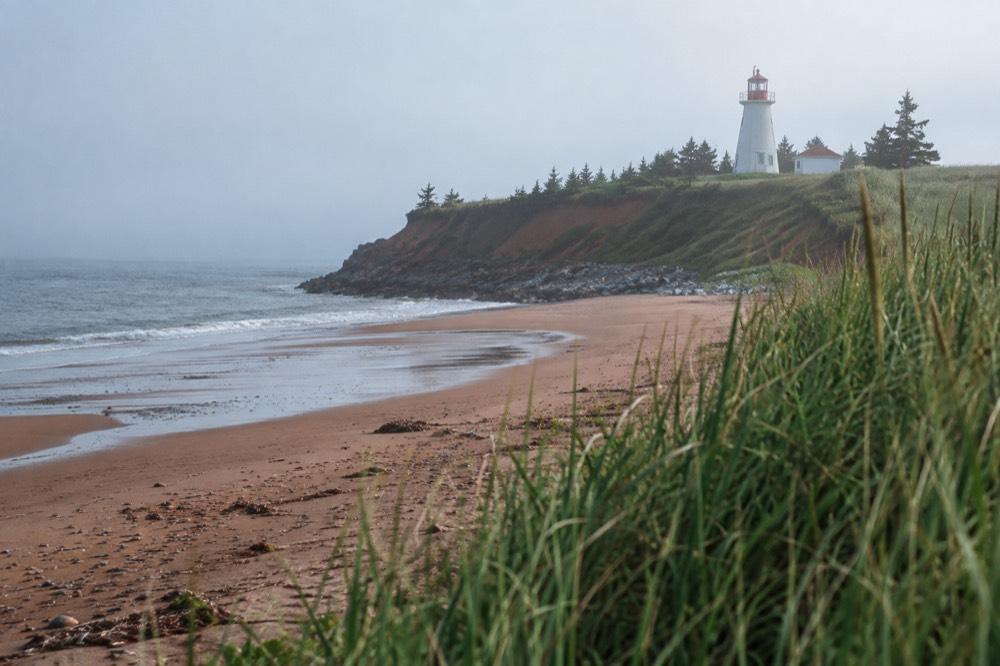
Distances on PEI are forgiving in one direction and punishing in the other. Any location on the Island is within two hours of Charlottetown, per Tourism PEI's own framing, but the Island is 224 kilometres end to end, so Point Prim and West Point are effectively opposite corners. A visitor who tries to see both famous towers in one day spends most of it driving.
The south-eastern cluster solves that. Point Prim, Cape Bear, Panmure Island and Wood Islands sit within a short drive of each other along the Points East Coastal Drive, and Wood Islands shares its point with the ferry terminal, so anyone arriving from Nova Scotia drives past a working lighthouse within minutes of landing. That is also the coast the private lighthouse tours concentrate on, which is no accident.
The order matters less than the direction. Starting from Charlottetown, the natural loop runs out through Point Prim first, follows the coast east through Cape Bear and Panmure Island, and finishes at Wood Islands, where the ferry terminal's snack bar and washrooms make a sensible last stop before the drive back. Doing it in reverse works too, and pairs neatly with a morning ferry arrival. Either way, budget a full day rather than an afternoon: the lights themselves take an hour each once you count the climbing and the photographs, and the coast road between them is half the point of the trip.
For a fuller treatment of the options, the site's Prince Edward Island lighthouse tours guide breaks down the coastal clusters in detail, and the private tours on Prince Edward Island guide covers what a per-group vehicle tour actually costs once you split it. For anyone weighing the crossing itself, the piece on whether the PEI ferry is worth it explains the Wood Islands arrival in practical terms.
Not every lighthouse day needs a car and driver, though. If your lighthouse interest is really a Charlottetown history interest, the Self-Guided Audio Walking Tour at $9.57 per person covers the city's waterfront heritage at your own pace, with a 4.8 rating from 9 reviews.
What To Know Before You Go Lighthouse Hopping
Most PEI lighthouse museums run short seasons, roughly June through September or early October, and the shoulder months matter: Point Prim stays open to 31 October, but Cape Bear closes 26 September and Wood Islands closes 1 October. Admission is typically a few dollars per person, hours are daytime only, and the drives between lights take longer than the map suggests because coastal roads are slow, scenic and worth slowing down for.
Timing against the season calendar is the single biggest planning item. The eight museum lighthouses all close between late September and mid-October 2026, and outside those windows you can still photograph the towers from the outside, which is free, but you cannot climb them. A mid-October visitor can still do Point Prim, whose season runs to 31 October, but the rest of the list will be exterior viewing only.
The other timing item is the ferry. Wood Islands lighthouse shares its point with the Northumberland Ferries terminal, whose 2026 season runs to 20 December, with eight sailings each way daily through mid-October and a reduced schedule after. A car with its passengers crosses for $43, and the Nova Scotia to PEI direction can be free on standby. Pairing the ferry arrival with the south-eastern lighthouse cluster is the most efficient lighthouse day on the Island: land, photograph Wood Islands, drive the coast road to Panmure Island and Cape Bear, and finish at Point Prim.
A few practical notes make the day smoother. The museum lights are small community operations, so carry some cash for admission even where cards are accepted, and do not expect washrooms or food at every stop; the towns of Souris, Montague and the Wood Islands ferry terminal fill those gaps on the south-eastern loop. Wind is a constant on every one of these points, and the red dirt roads to the remoter lights can be dusty after dry spells, so closed shoes beat sandals. None of the towers are long visits, which is exactly why the cluster approach works: the day is built from short stops strung together by good driving.
For visitors who prefer someone else to handle the driving, the comparison below shows how the two private options stack up. Both are priced per vehicle, not per person, which is the detail that changes the math for families.
| Tour | Price and basis | Duration | Rating and reviews |
|---|---|---|---|
| 7-Hour Private Lighthouse Tour | $684.52 per group, up to 6 | 7 hours | 5.0 from 1 review |
| Private Island Experience, Conrads | $682.31 per group, up to 5 | not stated | 5.0 from 58 reviews |
The Private Island Experience at $682.31 per group for up to five people carries the deeper review pool of the two, 58 reviews at a 5.0 rating, while the dedicated lighthouse tour has the focused itinerary and the longer stated day. At six passengers the lighthouse tour works out to about $114 each, which for a full seven-hour private day is competitive with per-person group tours that cover less ground.
If a private day is beyond the budget for your group, the site's overall tours on Prince Edward Island overview collects the full range of formats, and this site's own Prince Edward Island Tours pages keep every current price and season in one place.
Before locking in any lighthouse day, a quick check of the three options below covers both the private route and the budget alternative.
Common Questions About PEI Lighthouses
What Is The Most Famous Lighthouse In PEI?
Point Prim, built in 1845 at the entrance to Hillsborough Bay, is the most famous lighthouse on Prince Edward Island. It is the oldest in the province, it operates as a community museum from 15 May to 31 October, and its 2026 exterior restoration put it back in national news.
How many lighthouses does PEI have?
Prince Edward Island has 61 lighthouses and range lights, roughly one every 55 kilometres of coastline, which Tourism PEI describes as the highest concentration in North America. Eight of them operate as community museums open to visitors in summer.
Can you go inside PEI lighthouses?
Yes, at the eight that operate as community museums in season, including Point Prim, West Point, East Point, Panmure Island, Wood Islands, Cape Bear and Souris East. Seasons are short, mostly June through September or early October, and hours are daytime only. Outside those windows the towers can still be photographed from the outside.
Which PEI lighthouse received the Titanic distress signal?
Cape Bear, on the south-eastern shore. The Marconi station at the Cape Bear lighthouse received the Titanic's distress call as the liner sank. The station is now a separate museum, and the lighthouse's 2026 season runs 1 July to 26 September.
Can you stay at a PEI lighthouse?
West Point is the one to look at. It is the tallest lighthouse on the Island at about 20 metres, and the attached keeper's quarters operate as an inn. Its 2026 museum season runs 1 June to 10 October.
Is there a tour that covers the PEI lighthouses?
Yes. The 7-Hour Private Lighthouse Tour covers the south-eastern coast's lights for $684.52 per group, up to six people, about $114 each at six. The south-eastern cluster, Point Prim, Cape Bear, Panmure Island and Wood Islands, is also drivable on your own in a day from Charlottetown.