Do US Citizens Need A Passport To Go To Prince Edward Island?
US citizens need a valid US passport to fly to Prince Edward Island, and a passport or a Western Hemisphere Travel Initiative document to drive or take the ferry. Here is what each arrival route requires, with the real tolls and fares.

Do US Citizens Need A Passport To Go To Prince Edward Island?
Yes. Prince Edward Island is part of Canada, so a US citizen crossing into it is entering a foreign country and needs proof of citizenship and identity to do it. A full passport book is required if you fly. If you drive across the border and over the Confederation Bridge, or arrive on the ferry from Nova Scotia, a US passport card, a NEXUS card, or an Enhanced Driver's License also works. Children have slightly different rules.
The Island sits inside Canada, not beside it, and there is no way to reach it from the United States without an international border crossing. An American driving from Boston or New York passes through Maine, into New Brunswick, across the Confederation Bridge, and only then is on Prince Edward Island. Every one of those steps is inside Canada after the first.
The rules come from the Western Hemisphere Travel Initiative, the United States law that sets document requirements for citizens returning home from Canada, Mexico, and the Caribbean. Canada has its own matching entry expectations. In practice the two align: the document that gets you into Canada is the document that gets you back into the United States.
The single most important distinction is air versus everything else. Board a flight to Charlottetown, or any connecting flight through Toronto or Montreal, and the passport book is mandatory. A passport card will not clear security at a US airport for an international destination. Land and sea crossings are more flexible, which matters because most Americans reaching PEI drive.
There is a second, quieter reason to get the passport question right before booking anything: cancellation windows on tours are generous, but rebooking a sold-out Anne tour in August is often impossible. The Island's operators run small vehicles and small groups by design, and a family that arrives with the wrong documents, or discovers at the border that an expired card does not count, loses more than a day of the itinerary. The passport check belongs at the top of the planning list, ahead of hotels and ahead of tours.

Sorting the document question early matters for one practical reason: tours sell out. The Island drew 1.87 million non-resident visitors in 2025, a 10 percent jump over 2024, and operators reported July and August hotel occupancy around 98 to 99 percent. Waiting until the passport arrives to book the Anne tour is how Americans end up with the leftovers.
What Documents Work For Each Way Of Arriving?
For flights, only the passport book works, no exceptions. For the land route through Maine and New Brunswick, and for the Wood Islands ferry from Nova Scotia, US citizens can use a passport book, a passport card, a NEXUS card, or an Enhanced Driver's License issued by a participating state. Children under 16 arriving by land or sea can present a birth certificate instead.
Here is the full picture in one table.
| Arrival route | Documents a US citizen can use | Notes |
|---|---|---|
| Flying into Charlottetown (YYG), or any Canadian connection | US passport book only | The passport card is not valid for international air travel |
| Driving: border at Maine, then Confederation Bridge | Passport book, passport card, NEXUS card, or Enhanced Driver's License | EDLs are issued by a limited number of states; check yours before relying on one |
| Ferry from Caribou, Nova Scotia to Wood Islands, PEI | Passport book, passport card, NEXUS card, or Enhanced Driver's License | Treated as a sea crossing under the same rules |
| Children under 16, land or sea | US birth certificate, or US passport | A consular report of birth abroad also works for foreign-born US citizen children |
| Children under 16, flying | US passport book only | Same air rule as adults |
Two cautions worth printing plainly. First, a NEXUS card speeds up the border but enrollment takes months, so it is not something to arrange for a trip next month. Second, an Enhanced Driver's License exists only in a handful of states; if yours is not one of them, your ordinary driver's license is not a travel document and will not get you across.
A third caution applies to the documents themselves rather than their type. Check the expiry date against your return date, not your departure date. Canada will generally refuse entry to a traveler whose passport expires imminently, and US rules for re-entry are stricter still, so a passport with two weeks left on it is a problem even if the trip is only five days. Renewal by mail from the United States currently runs on the order of weeks, and expedited service costs more, so the check is worth doing the moment the trip becomes real.
The Express Anne Tour is a good early booking for exactly this reason. It runs 3 hours 30 minutes, costs $72.87 per person, and holds a 4.7 rating from 3 reviews, so the small pool means availability moves fast in peak weeks.
Once the document side is settled, the rest is logistics, and the Island is small: 224 kilometres end to end, with Tourism PEI's own guidance that any Island location sits within two hours of Charlottetown. Americans often overestimate the driving. The guide to getting to Prince Edward Island covers every route in detail.
Can You Fly Directly, And What Does The Airport Require?
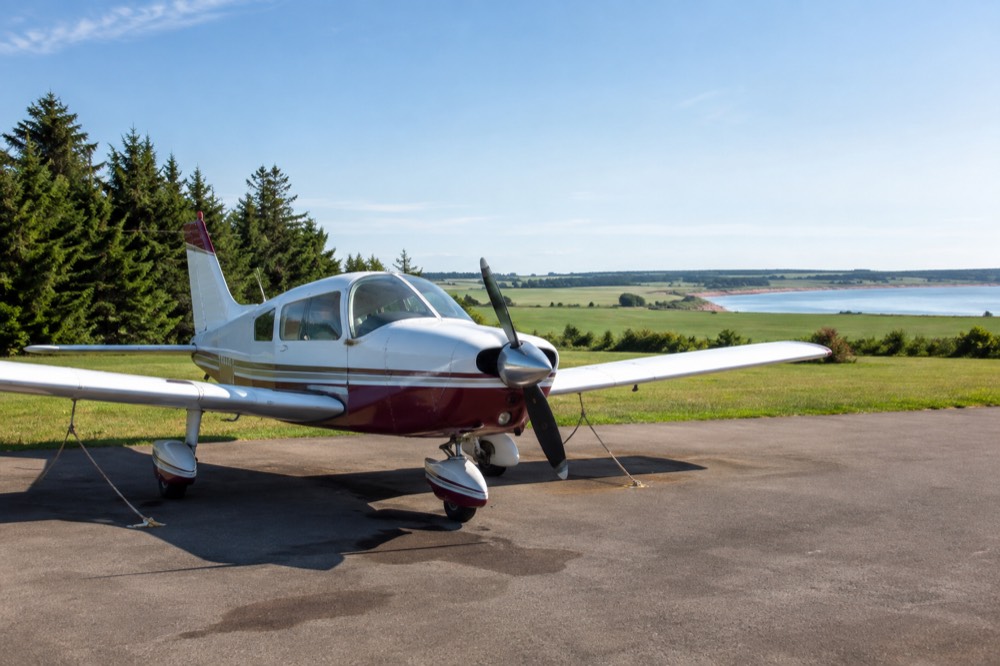
Yes, with a passport book and usually one connection. Charlottetown Airport is the Island's only commercial field, and US citizens flying into it need the full passport book, checked at the US departure airport and again by Canadian officers on arrival. There is no US preclearance at Charlottetown, so the Canadian entry interview happens on Island soil.
Most Americans route through Toronto, Montreal, or Halifax. The 2025 passenger count at Charlottetown was 391,086, a 4.8 percent dip from the 2024 record, and the airport authority is mid-way through a $44 million terminal expansion aimed at June 2027, with new security screening and a bigger departure lounge coming. The airport also gained seasonal lift: Porter Airlines flew daily non-stops between Charlottetown and Montreal Metropolitan Airport from 18 June to 7 September 2026.
The practical note for American flyers is the return leg. Departing Charlottetown for a US connection means clearing Canadian security and then US customs at the connecting airport, so build buffer time. A tight 60-minute connection in Toronto in August is a gamble, not a plan.
For travelers who prefer to lock in the anchor activity before anything else, the Express Anne Tour is the one to reserve while the flights are still being compared. It reaches the Cavendish cliffs and the Green Gables country in half a day, which leaves the rest of the arrival day free.

What Does Driving Over The Confederation Bridge Cost?
The bridge toll is $20.00 for a passenger vehicle, charged on a round-trip basis and collected only when leaving the Island, at the toll plaza in Borden-Carleton. Arriving costs nothing at the gate. The rate has been $20.00 since 1 August 2025, when the federal government cut it from the old $50.25, a figure many older travel guides still print.
That last point deserves emphasis because it is the most common stale number an American will meet. The official toll schedule lists $20.00 for the first two axles, with no per-axle surcharge on top, and the charge lands on the way out. A road trip that budgets $50 for the crossing is budgeting for a toll that no longer exists.
The drive itself is the classic American route to PEI: Boston or New York to Maine, the border crossing at Calais or Jackman, up through New Brunswick on Route 2, over the 12.9 kilometre bridge, and onto the Island. The bridge is Canada's longest and the world's longest over ice-covered water. It runs 24 hours a day, no reservation needed. The full index of guides sits on Prince Edward Island Tours.
Budget the whole driving day honestly. From Boston the border is roughly five hours out, and Borden-Carleton is another four to five hours beyond it, so most Americans break the trip in New Brunswick. The bridge toll is a rounding error next to fuel and a night in Moncton or Saint John, and the leave-only collection means the charge never interrupts the arrival momentum. Pedestrians and cyclists cannot cross the bridge itself; a shuttle runs for them at $4.75 per pedestrian and $9.50 per cyclist round trip, fees few Americans ever need but worth knowing if a cycling itinerary is in play.
For a self-guided arrival day, the audio driving tour of the north shore costs $13.25 per group for up to 12 people and runs 2 to 4 hours, a cheap way to turn the first afternoon into a tour without coordinating anyone's schedule. Details on the wider options are in the private and group tours guide.
Is The Ferry From Nova Scotia An Option For US Visitors?
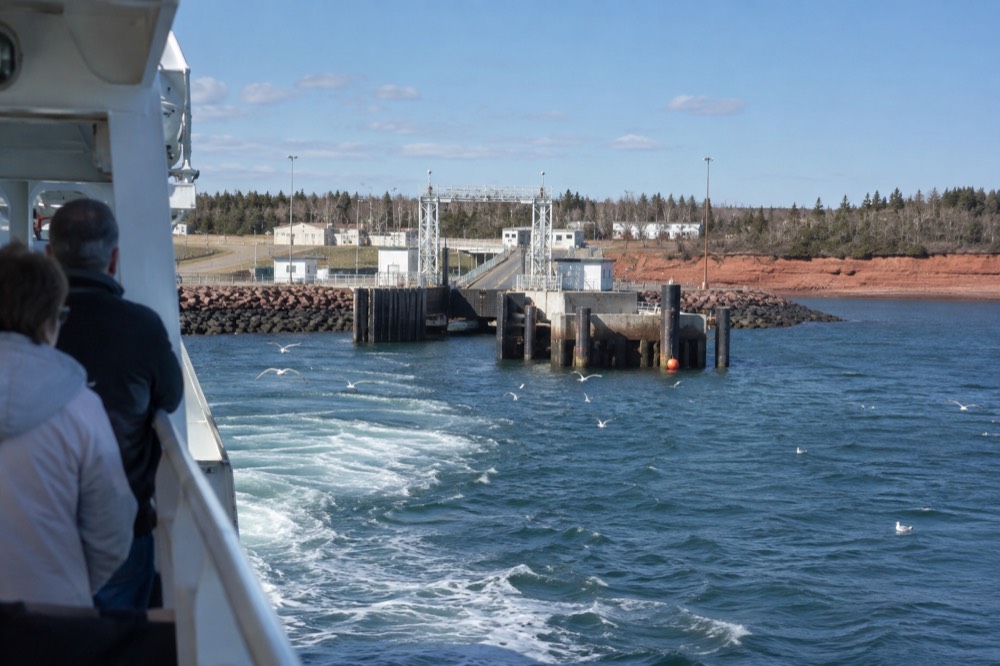
Yes. The Wood Islands to Caribou ferry carries a standard vehicle and its passengers for $43 on the 75-minute crossing, and the Nova Scotia to PEI direction can be free on standby, subject to space. The 2026 season runs to 20 December, with eight sailings each way daily through mid-October and a reduced schedule after.
The fare structure is unusual and worth understanding before you book. The paid leg is the one leaving Prince Edward Island, mirroring the bridge's leave-only toll logic, and the operator sells round-trips from the Caribou, Nova Scotia side. Standby travel from Nova Scotia into PEI costs nothing, but boarding is not guaranteed, since space is allocated by vehicle type and height rather than strict first-come order. The operator's fares page spells out every category, from the $11.50 adult foot passenger fare to the $22.50 motorcycle rate.
For an American road tripper doing the Maritimes, the smart pattern is obvious: bridge on, ferry off, or the reverse, so you pay the cheaper of the two exit costs and see both coastlines. The ferry lands at Wood Islands in the Island's southeast, inside lighthouse country, an area covered in the PEI lighthouse tours guide.
Reservations are not mandatory but the operator recommends them, and the reason is capacity rather than price: a full sailing turns away standby vehicles without ceremony, and an American with a fixed flight home out of Halifax cannot absorb that risk. Book the paid departure leg, treat the free inbound standby as a bonus when it works, and keep a fuel cushion for the drive-around fallback if the dock is full.
Do Children And Non-Citizen Family Members Need Different Documents?
US citizen children under 16 crossing by land or sea can show a birth certificate instead of a passport, but any child flying needs a passport book. Non-US-citizen family members follow their own rules: green card holders need their permanent resident card for land and sea entry, and visa requirements depend on nationality. Mixed-status families should check everyone's documents, not just the passport holders.
The child exemption is the one that saves American families real money and renewal time, but it applies only to the land and sea routes. A family driving from Maine with three kids can carry three birth certificates and two adult passports. The same family flying through Toronto needs five passport books.
One more document note that trips up Americans: the drinking age on Prince Edward Island is 19, not 21. A 20-year-old American who orders a beer at a Charlottetown pub is legal here, but the same person should carry ID everywhere, since licensees demand proof from anyone who looks under 19 by provincial law, and a US driver's license works fine for that purpose.
Mixed-status families should also know that the border interview covers everyone in the vehicle together. A Canadian officer questions the whole car at once, and one traveler's missing document can hold up the entire family, so the pre-trip check is a household task, not an individual one. Bring the green card itself, not a photocopy, and bring adoption or custody papers if a child in the group travels without both legal parents, since officers ask for them routinely at land crossings.
Common Questions About US Passports And Prince Edward Island
Do US Citizens Need A Passport To Go To Prince Edward Island?
Yes. A US passport book is required to fly. For driving over the Confederation Bridge or taking the ferry, a passport card, NEXUS card, or Enhanced Driver's License also satisfies the rules, and children under 16 can use a birth certificate on land and sea crossings.
Can a US citizen use a passport card to visit PEI?
Only by land or sea. The passport card works at the Maine border crossing and on the Wood Islands ferry, but it is not accepted for international flights, so anyone flying to Charlottetown needs the full passport book.
Do US green card holders need a visa for Prince Edward Island?
A US permanent resident needs their valid green card to enter Canada by land or sea, and generally needs an electronic Travel Authorization or visa for air entry depending on nationality. Check with Canadian authorities for the specific passport held, not the green card alone.
Is the border crossing to get to PEI slow?
The US to Canada crossing is in Maine, hours before the Island itself, and wait times vary by crossing and season. The Confederation Bridge has no border at all; once you are in New Brunswick you are already in Canada, and the bridge toll plaza only collects money, not documents.
Do I need anything extra to take tours once I am on the Island?
No. Tours on Prince Edward Island are ordinary paid activities with no separate documentation beyond what got you into Canada. Some activities carry their own rules: fishing trips are governed by seasonal catch limits, and tastings at distilleries and wineries require you to be 19 or older.
How far in advance should an American book PEI tours?
Early. The Island set records in 2025 with 1.87 million non-resident visitors and 98 to 99 percent peak-season hotel occupancy reported by operators, so popular small-group tours in July and August fill well ahead. Book once your passport situation is confirmed, not after you arrive.