Can You Bike Around Prince Edward Island?
Yes, you can bike around Prince Edward Island: the Confederation Trail runs 273 km tip to tip on gentle gradients. Here is how long it takes, the e-bike rules and when to ride.
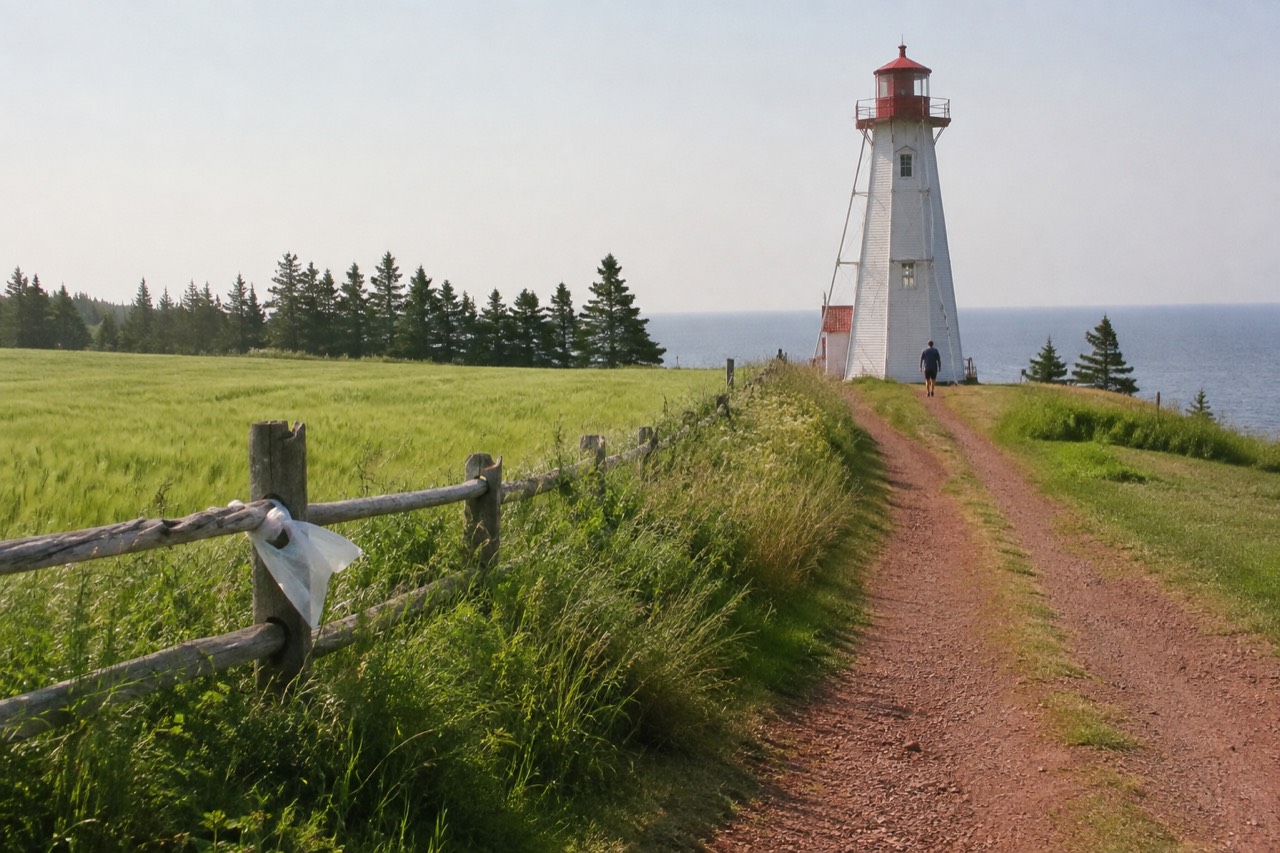
Can You Bike Around Prince Edward Island?
Yes, and it is one of the gentlest full-province rides in Canada. The Confederation Trail runs tip to tip from Tignish to Elmira, 273 kilometres on the main trail and 449 counting branches, on stone dust with gradients never steeper than 2 percent. The Island is only 224 kilometres end to end, so a circuit is a realistic week, not an expedition.
The question people are really asking is usually about scale. Prince Edward Island is Canada's smallest province, and Tourism PEI's own framing is that you can drive from one end to the other in about 3 to 4 hours, with any location on the Island within two hours of Charlottetown. On a bicycle that same geography becomes a five-to-seven-day project, which is exactly the sweet spot for a first multi-day tour: long enough to feel like an achievement, short enough that you never need to train like a racer.
The trail is a converted railway line, which explains the gradients. Trains do not climb steep hills, and neither will you. The surface is rolled stone dust, which rides well on anything from a gravel bike to a hybrid with medium tyres; a road bike with 25 mm slicks will work but will rattle your fillings on the dry stretches in August.
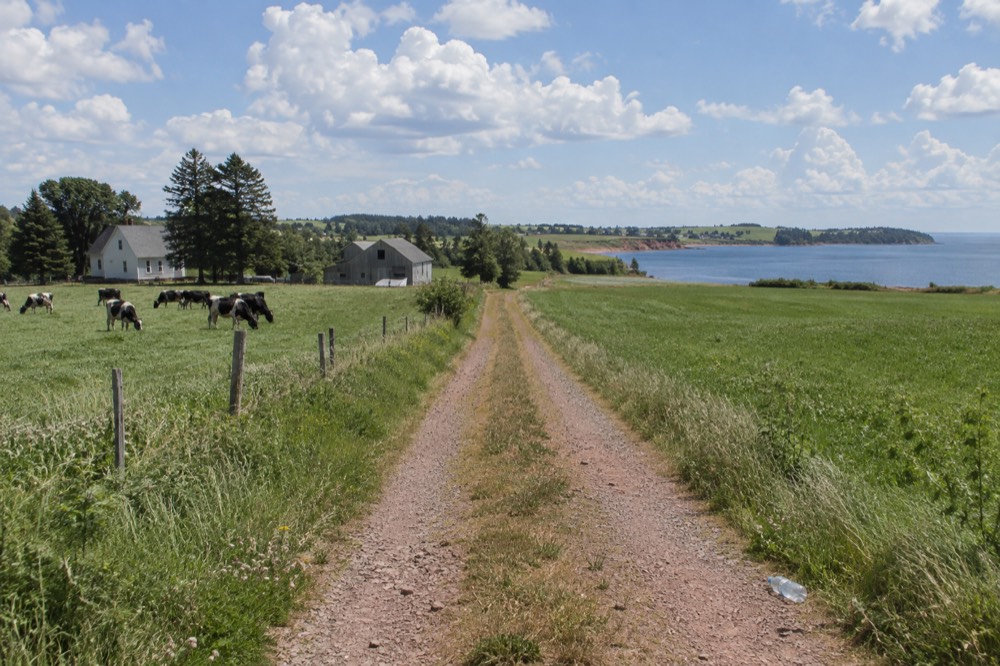
If you are weighing a self-supported trip against a supported tour, the supported side has real advantages here: PEI's summer accommodation fills early, and a tour operator handles the bookings. This site's Prince Edward Island bike tours guide breaks down the full roster, and the three options below cover the most common starting points, from a full e-bike tour of the capital to a budget audio walk.
How Long Does The Tip-To-Tip Ride Actually Take?
Most riders plan five to seven days at 40 to 60 kilometres a day, which leaves afternoons for beaches, oysters and lighthouses. The main trail runs from Tignish at kilometre 0 to Elmira at kilometre 273, with distances marked west to east and branch trails numbered from their junctions. There is no official itinerary; you build your own from the kilometre posts and the towns along the way.
The classic plan starts at Tignish on the western tip and rides east. The first days are the quietest: small fishing communities, long stretches with no services, and the wind off the Gulf. Mid-Island brings the bigger towns, Charlottetown on a branch, and the eastern half finishes through Kings County farmland to Elmira, where the trail ends at a restored railway station.
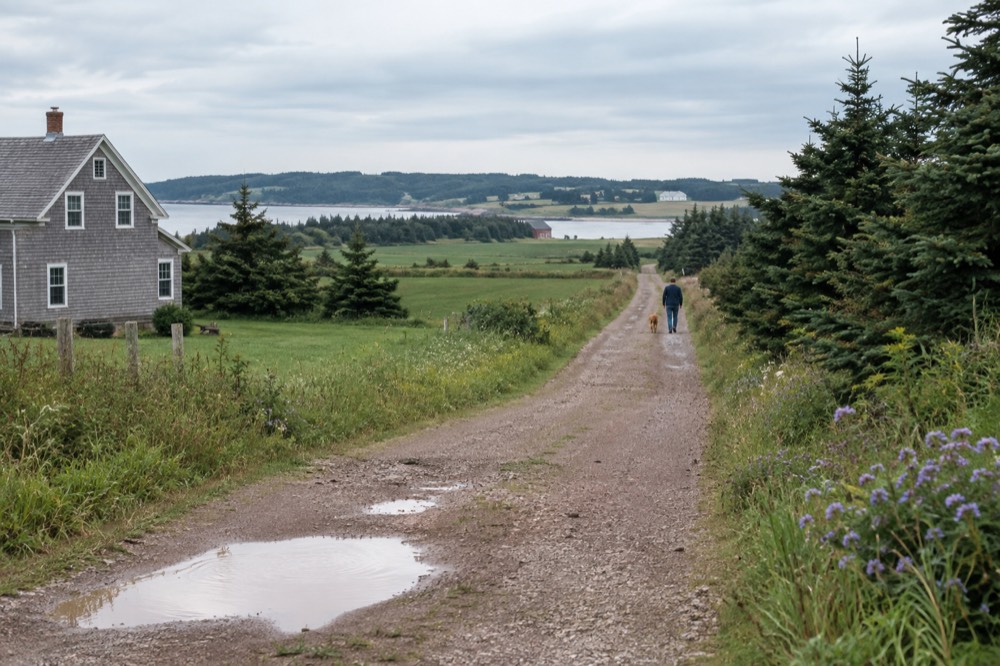
A sample week, using the trail's own kilometre markers:
| Day | Section | Rough distance | Notes |
|---|---|---|---|
| 1 | Tignish to O'Leary | 40-45 km | Quiet start, stock up on supplies |
| 2 | O'Leary to Summerside | 45-50 km | Waterfront city, full services |
| 3 | Summerside to Kensington | 30-40 km | Short day, optional spur routes |
| 4 | Kensington to Charlottetown area | 45-55 km | Capital city via branch trail |
| 5 | Charlottetown to Morell or St. Peters | 50-55 km | Lakes and coastal farmland |
| 6 | Morell to Elmira | 40-45 km | Finish at the eastern terminus |
Distances are planning ranges drawn from the trail's kilometre markers, not a published schedule; adjust to your pace and the wind, which on this Island is a real factor. The prevailing southwest wind favours the west-to-east direction, which is why most itineraries run Tignish to Elmira rather than the reverse.
Not everyone wants to commit a week. If you just want to sample the trail or the capital on two wheels, a half-day guided ride is the sensible test, and the question below covers whether you even need to bring your own bike. A city ride also tells you quickly whether the stone dust surface and the Island wind suit you at all, before you stake a week of accommodation on them.
Are E-Bikes Allowed On The Confederation Trail?
Yes, but only from 1 April to 30 November each year, and only if the bike meets PEI's power-assisted bicycle specs: a motor of 500 watts or less continuous, assistance cutting out at 32 km/h on level ground, and a maximum weight of 120 kilograms including the battery. In winter the trail is leased exclusively to the PEI Snowmobile Association from 1 December to 31 March.
Those rules come straight from the Government of Prince Edward Island's power-assisted bicycle regulations, and they matter more here than in most provinces because the trail is the main car-free route on the Island. A compliant e-bike is treated like a conventional bicycle wherever bikes are permitted. A non-compliant one, a throttle-driven scooter that exceeds the limits, is not welcome on the stone dust.
The winter lease is worth understanding before you book anything in the shoulder season. From 1 December to 31 March, contingent on adequate snowfall, the Snowmobile Association assumes maintenance and grooming of the trail, and cycling is off the table. That leaves a genuinely long riding window, April through November, but a hard stop at the end of it.
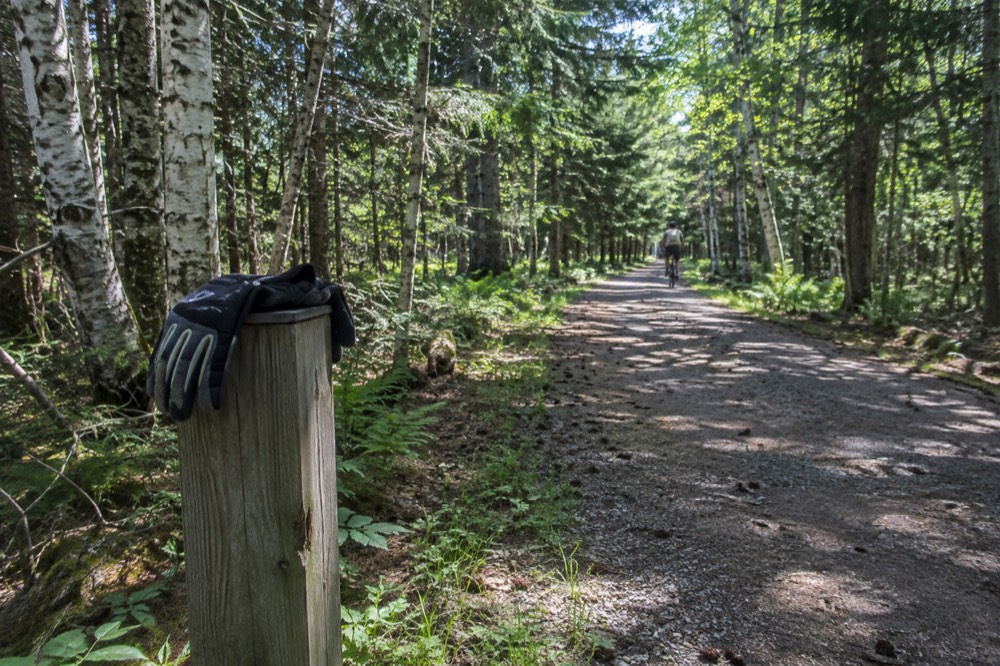
E-bikes change the arithmetic of the whole trip. On a pedal-assist bike the 55-kilometre day stops being a fitness question and becomes a sightseeing question, and the wind stops being the boss of your itinerary. The roster reflects that: the 3-Hour E-Bike Tour of Charlottetown runs $125.13 per person for 3 hours 30 minutes, rated 4.7 from 50 reviews, and covers the capital's historic core with the motor doing the work on the hills by the harbour.
How Fit Do You Need To Be?
Less fit than the distance suggests. The gradient ceiling of 2 percent means there is nothing on the main trail a recreational cyclist cannot climb in a comfortable gear, and the surface is smooth enough for wide road tyres. The honest challenges are wind, distance between services on the western end, and saddle time: five or six consecutive 50-kilometre days is the real training requirement.
If you ride a few times a month at home, you can do this. Riders who commute by bike will find the main trail almost easy, and many add branch trails to stretch the days. The people who struggle are the ones who underestimate the wind: a steady headwind on an exposed stretch of the western trail can turn a 45-kilometre day into something that feels like 70.
The e-bike question from the previous section applies here too. A compliant pedal-assist bike flattens the difficulty curve so completely that the trip becomes accessible to riders who would never attempt 273 kilometres unassisted. If you are riding as a couple with mixed fitness, one e-bike and one acoustic bike is a common compromise that keeps the pair together.
A shorter, cheaper sampler also exists for testing the format: the Guided E-Bike Tour of Historic Sights at $78.18 per person for 2 to 3 hours, rated 4.8 from 16 reviews. If you are unsure whether a full week of riding suits you, a two-hour spin through Charlottetown's historic sights answers that question for less than the cost of a night's accommodation.When Is The Best Time Of Year To Ride?
May through September, with September arguably the best month. The trail itself is rideable from the 1 April e-bike opening until snow, but the Island's tourism infrastructure runs on a summer clock: national park facilities are closed mid-October to mid-May, full services run July and August only, and November to April accounts for just 14 percent of annual non-resident visitor spending.
June offers long daylight, green fields and thinner crowds, but the water is cold and some seasonal services are still opening. July and August give you everything open, every oyster shack and lighthouse museum running its full hours, plus the busiest accommodation market on the Island: July and August 2025 saw hotel occupancy around 98 to 99 percent in operator reports. Book ahead or ride in a different month. The full index of guides sits on Prince Edward Island Tours.
September is the connoisseur's choice. The water is at its warmest of the year, the crowds thin after Labour Day, and the fall food festivals start. The PEI International Shellfish Festival runs September 17 to 20 in Charlottetown, and Fall Flavours runs September 24 to October 10 across the Island, either of which can anchor the finish of your ride. The one caution: the Canada Strong Pass free-admission window at national parks and Green Gables ended September 7, 2026, and regular fees apply after.
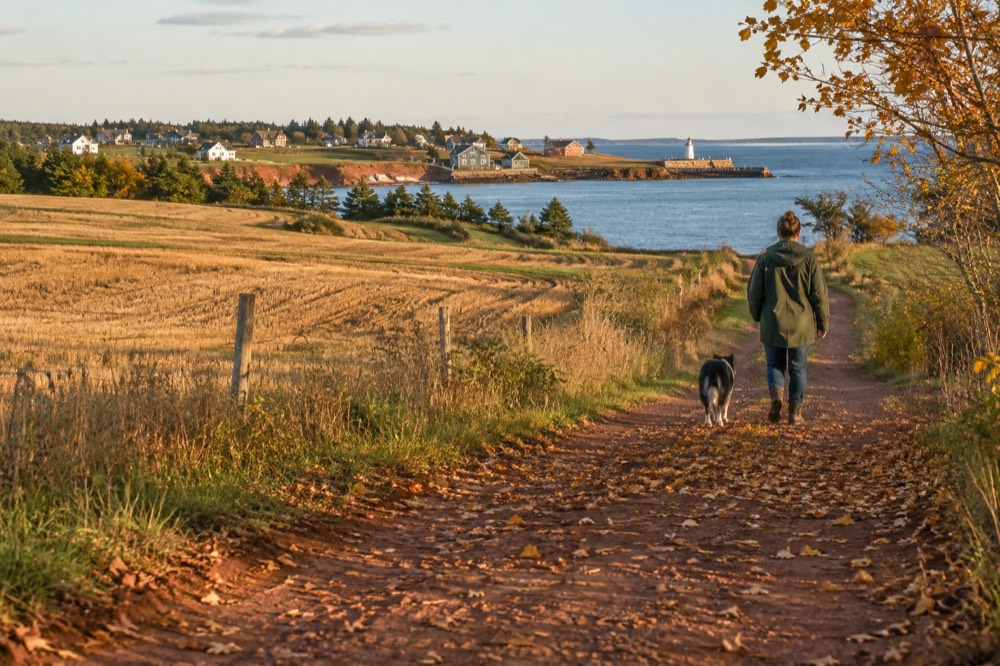
October riding is possible and often beautiful, but you are racing the facility calendar: park visitor services shut down mid-October, and the e-bike window closes 30 November. This site's best time to visit Prince Edward Island guide covers the month-by-month trade-offs in more detail.
How Do You Get To The Island With A Bike?
The same ways everyone else does, and cheaply. A car with its passengers crosses the Wood Islands ferry for $43, and the Confederation Bridge toll is $20.00 for a passenger vehicle, collected only when leaving the Island at Borden-Carleton. Cyclists who ride the bridge itself use the shuttle, $9.50 round-trip per cyclist, since pedalling the bridge span is not permitted.
The ferry is the cyclist's friend. It runs Wood Islands to Caribou, 75 minutes, with a 2026 season running to 20 December and eight sailings each way daily through mid-October. The Nova Scotia to PEI direction can be free on standby for vehicles, though boarding is subject to availability and a reservation is the only guarantee. A bicycle crosses for $11.
The bridge shuttle details, including the $4.75 pedestrian fare and baggage fees, are on the operator's pedestrian and cyclist page. Most riders arrive with a car, ride sections of the trail on day trips, and skip the logistics of a full circuit; that is a legitimate way to do PEI too, and it is essentially what the supported tours offer.
Should You Ride Self-Supported Or Book A Tour?
Self-supported suits confident planners: the trail is impossible to get lost on and every town of any size has a bed. A supported tour suits everyone else, and with peak-season occupancy near 99 percent, having someone hold your reservations is worth real money. The two are not mutually exclusive: many riders tour the trail and book a guided city ride for their Charlottetown day.
Self-supported riders need to solve three things: accommodation (book July and August months ahead), food (the western half has long service gaps, so carry lunch), and bike logistics (rentals exist in Charlottetown and Summerside, but no sourced 2026 rental price data exists, so check the operator directly). The trail itself is free, which is the good news: there is no entry fee, no permit and no booking for the Confederation Trail at any time of year.
Guided options on this site's roster are city-based rather than full-circuit, which tells you something about the market: most visitors bike PEI in pieces. The full roster, from the $9.57 self-guided audio walking tour of Charlottetown to the $125.13 e-bike tour, is laid out with prices and review counts in the Prince Edward Island tour prices guide.
For the trail itself, the classic self-supported pattern is to book a Charlottetown hotel for the night before and after, shuttle or drive to Tignish, and ride east with baggage transferred or carried. Some riders do the reverse to finish in the capital. Whichever direction you choose, the piece most first-timers underestimate is not the riding, it is the July accommodation market, and that is a booking problem, not a fitness one.
If a week on the trail is more than you want, the question below is the one to answer instead: where the prettiest single stretch is, because PEI rewards the rider who samples it well. The most scenic part of the Confederation Trail is covered in its own piece on this site, and the trio below covers the supported alternatives, from a full e-bike tour to a budget audio walk.
Common Questions About Biking Around Prince Edward Island
Can You Bike Around Prince Edward Island?
Yes. The Confederation Trail runs 273 kilometres tip to tip from Tignish to Elmira, on rolled stone dust with gradients never steeper than 2 percent. Most riders complete it in five to seven days at 40 to 60 kilometres a day, and e-bikes that meet PEI's 500-watt and 32 km/h limits are allowed on the trail from 1 April to 30 November.
Is the Confederation Trail paved or gravel?
Neither, exactly. The surface is rolled stone dust, which packs into something firmer than loose gravel but softer than pavement. Wide road tyres, hybrids and gravel bikes all handle it well; very narrow slick tyres will work but are less comfortable on dry summer stretches.
Can you ride the whole trail on an e-bike?
Yes, if the bike meets the provincial spec: a motor of 500 watts or less continuous, assistance cutting out at 32 km/h on level ground, and 120 kilograms maximum including the battery. The riding window for power-assisted bikes is 1 April to 30 November. From 1 December to 31 March the trail is leased to the PEI Snowmobile Association.
Where does the trail start and finish?
The main trail runs from Tignish at kilometre 0 in the west to Elmira at kilometre 273 in the east, with distances marked west to east. Branch trails, which bring the total network to 449 kilometres, are numbered from their junctions with the main line.
Do you need to book accommodation in advance?
In July and August, yes, without exception. Operator reports put peak-season hotel and inn occupancy around 98 to 99 percent in 2025. May, June, September and October are far more forgiving, and September combines open services with the Shellfish Festival and Fall Flavours food events.
Is there a fee to use the Confederation Trail?
No. There is no entry fee, permit or reservation for the trail at any time of year. The costs are getting to the Island, a car is $43 on the ferry or a $20.00 bridge toll collected when leaving, and your accommodation along the way.